Launched by the Soviet Union on October 4th, 1957, at 22:28:34 Moscow Time, Sputnik 1 became the world’s first artificial satellite. This 83.6-kg (184-pound) metal sphere orbited Earth every 98 minutes, transmitting radio signals for three weeks – before burning up on January 4th, 1958. Its launch marked the dawn of the Space Age, ignited the Space Race, and opened a new era of exploration beyond our planet.
Dobryninskaya metro station
Located deep beneath central Moscow, Dobryninskaya (Добры́нинская) Metro Station is one of the more striking historic stops on the Moscow Metro. Opened on January 1st, 1950, it forms part of the circular Koltsevaya Line (Circle line/Line 5), which loops around the city centre.
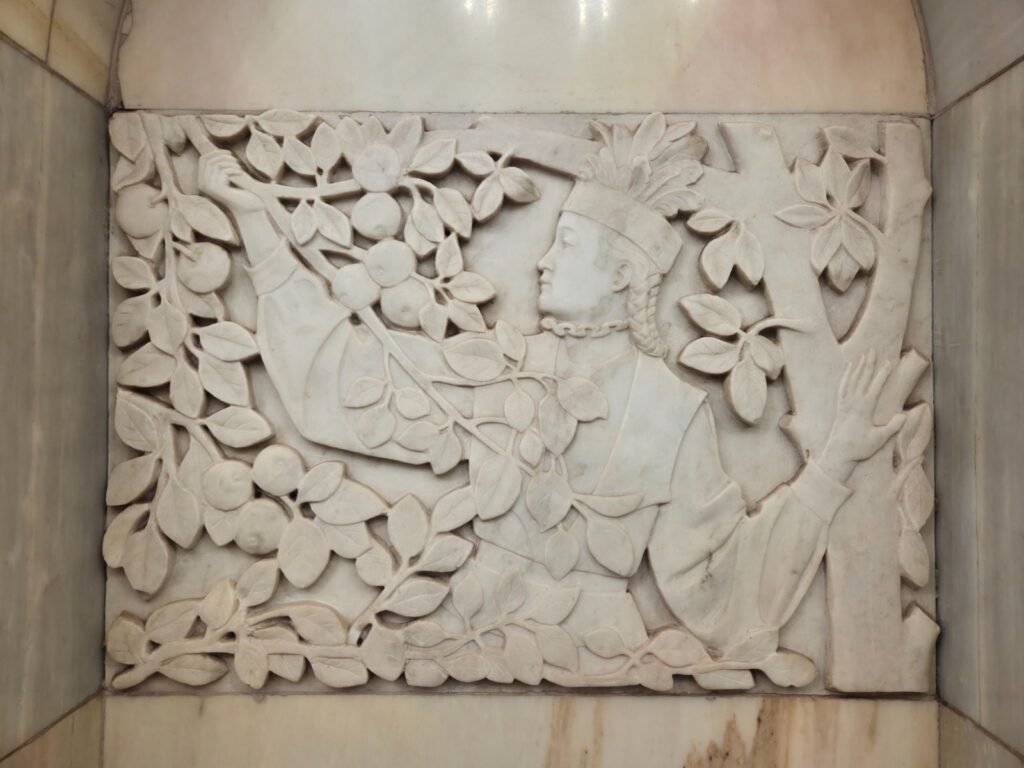
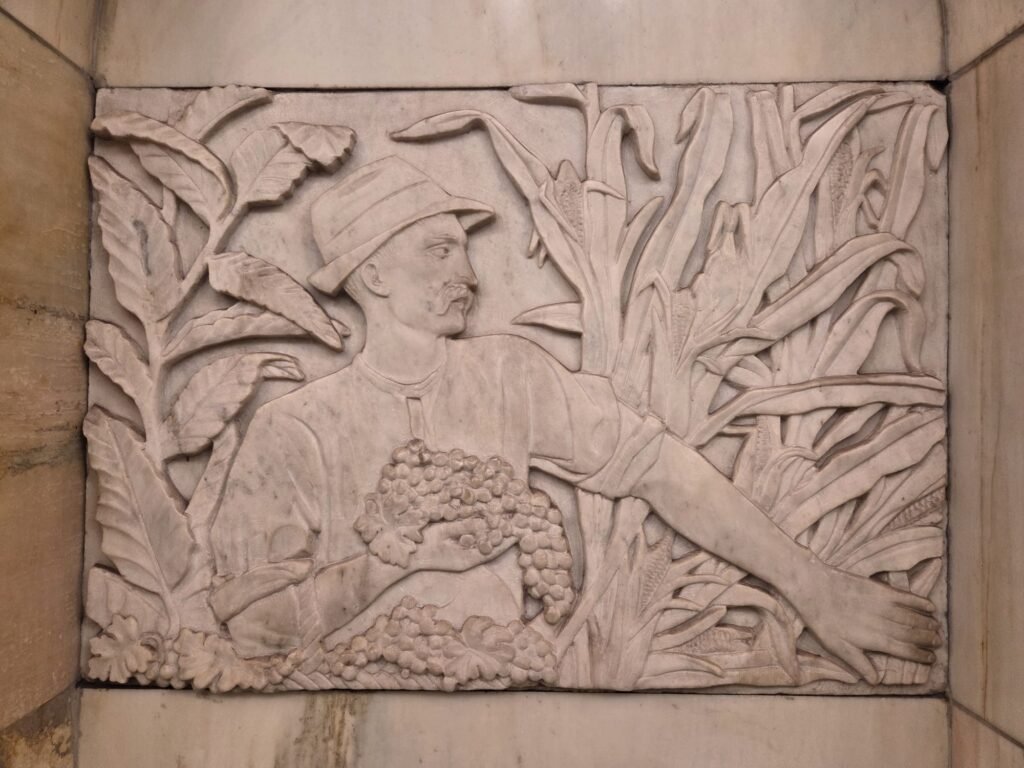
What sets Dobryninskaya apart is its rich architectural and historical character. Designed in the grand Stalinist style, the station features polished marble arches, intricate decorative reliefs, and ornate lighting, hallmarks of the early metro stations often described as underground “palaces.” Its visual design reflects Soviet-era ideals, with mosaics and motifs celebrating labour, industry, and the state.
The station takes its name from Pyotr Dobrynin, a Bolshevik revolutionary, linking it directly to the political and cultural history of its time.
Stalin’s Influence on the Koltsevaya Line of the Moscow Metro
An enduring urban legend claims that Joseph Stalin himself inspired the creation of the Koltsevaya Line (Кольцева́я ли́ния) in an unexpected way. According to the story, while reviewing an early metro plan that lacked a circular route, Stalin placed his coffee cup on the map. When he lifted it, it left a ring-shaped stain around the centre of Moscow. Noticing this, he allegedly remarked, “This is your main mistake; it should be built,” pointing to the circle.
Though almost certainly fictional, the tale persists as a colourful explanation for both the line’s circular design and its distinctive brown colour on metro maps, said to echo the mark left by the coffee cup.
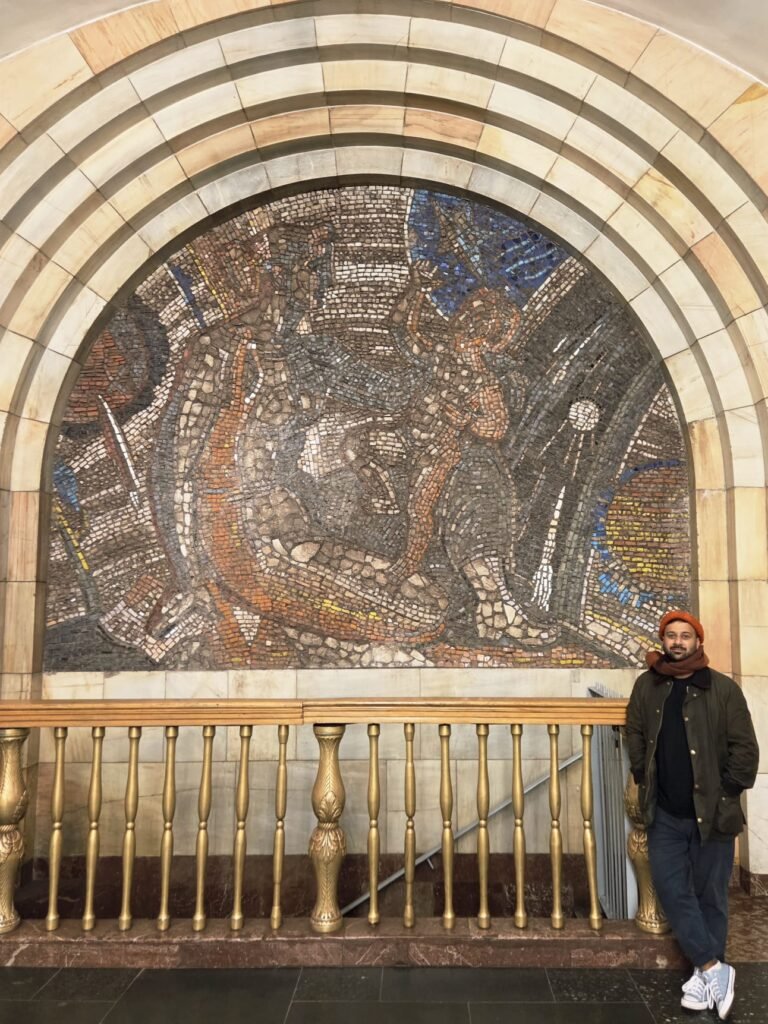
Why does Dobryninskaya Metro Station feel like a Church?
The Dobryninskaya metro station features a pylon tri-vault design in the ornate style of the late 1940s–early 1950s. Architects Leonid Pavlov drew strong inspiration from traditional Russian church architecture, especially the Church of the Intercession on the Nerl. This influence is evident in the elegant proportions, arched portals, and pale marble finishes, echoing the simplicity and harmony of medieval Orthodox design.
How De-Stalinization Paved the Way for Soviet Space Age Art
At the end of the metro hall, Elena Yason-Manizer created the station’s original bas-relief, which featured a large profile of Joseph Stalin alongside the Coat of Arms of the Soviet Union. This was removed in 1961 during de-Stalinization, as the party moved away from glorifying Stalin.
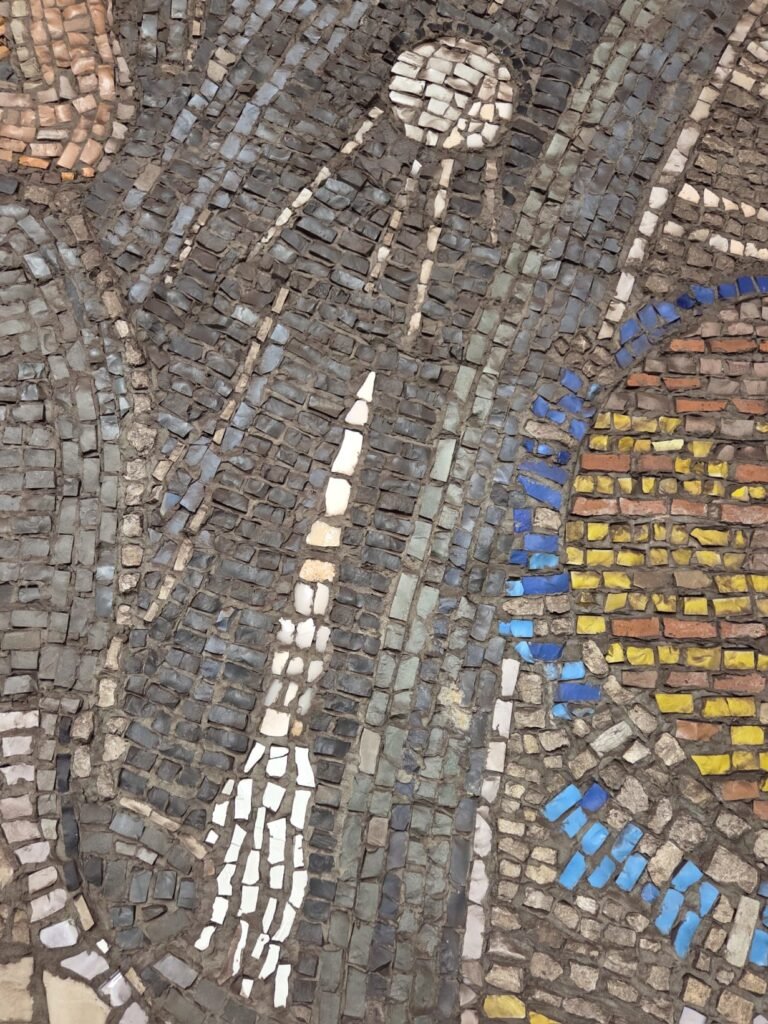
In 1967, it was replaced with a mosaic by Serafim Pavlovsky, titled Morning of the Space Age. The new work reflects a shift in Soviet art toward themes of progress and exploration, inspired by achievements like Sputnik 1, and marks a clear move away from political imagery toward a broader celebration of the space age.
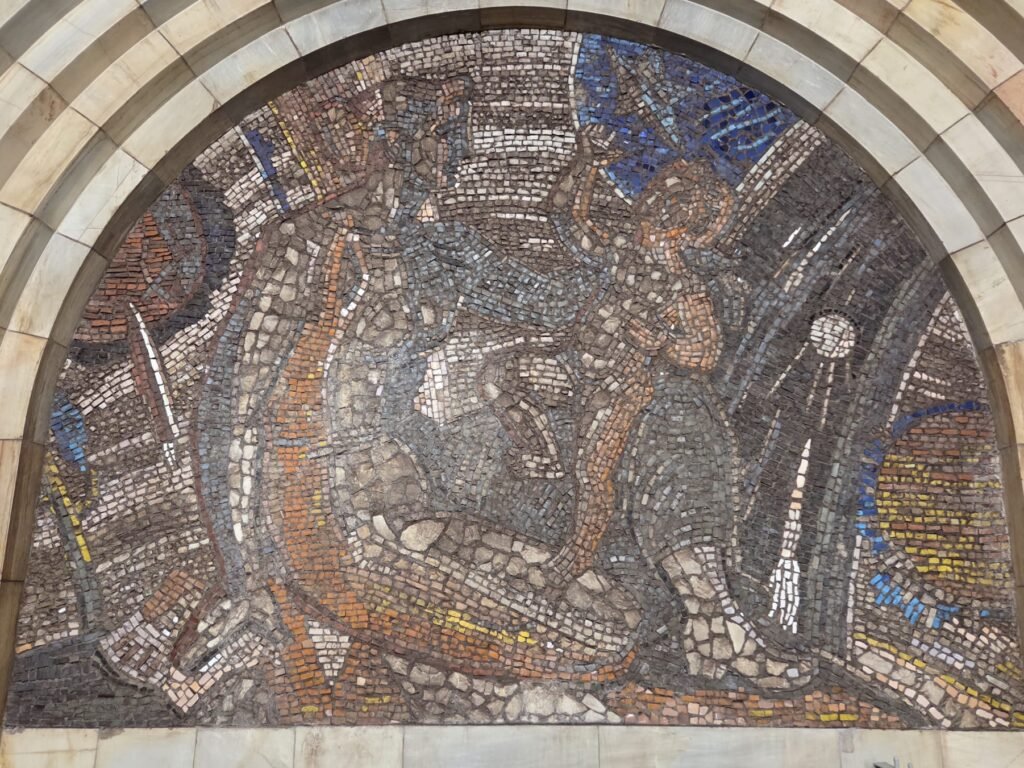
Morning of the Space Age
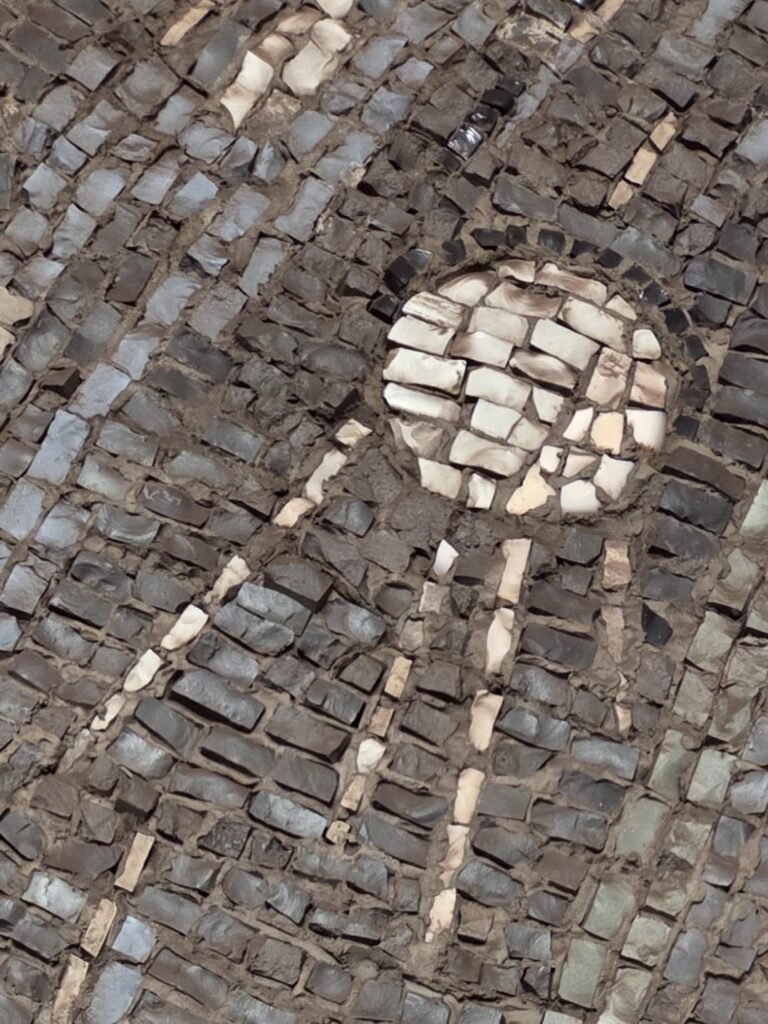
Morning of the Space Age is seamlessly integrated into the station’s grand interior, which evokes the atmosphere of a traditional church. The mosaic is composed of natural stone and smalt, giving it a luminous, almost sacred quality.
It depicts a woman holding a child, surrounded by stars, planets, rockets, and Sputnik 1, a symbolic vision of cosmic birth and progress. Within the station’s architecture, the composition is often interpreted as a “Soviet Madonna and Child,” blending spiritual visual language with the imagery of space exploration and technological optimism.
Discover Soviet Space Mosaics
Our project has mapped quite a few monumental artworks depicting space exploration across the former USSR. Using our Interactive Map, you’ll be able to find them (filter on theme “Cosmos”), view them, and navigate to them easily!
If you’d rather join a guided adventure, several guides or tour operators, such as by Ravi Mistry, the author of this blog post, offers unique opportunities to explore former Soviet regions with experts who know their history and hidden corners.
Leave a Reply