
April 12th is celebrated far beyond the borders of the former USSR. More than a milestone in scientific progress, space exploration also left a lasting imprint on Soviet art and visual culture. Below are some of the most iconic Soviet mosaics dedicated to Space Day.
What is Cosmonautics Day?
On the 12th of April, Yuri Gagarin left our blue planet and made history as the first human in space. His achievement made him an overnight global icon at the height of the Cold War and Space Race between the United States and the Soviet Union.
This landmark moment in aviation and space exploration was celebrated across the Soviet Union, marking the beginning of a new era filled with ambition, discovery, and challenge.
Today, 12th April is still commemorated around the world as Cosmonautics Day, a tribute not only to Gagarin’s pioneering journey, but also to the courage and sacrifice of the many cosmonauts and animals who gave their lives in the pursuit of scientific progress and space exploration.
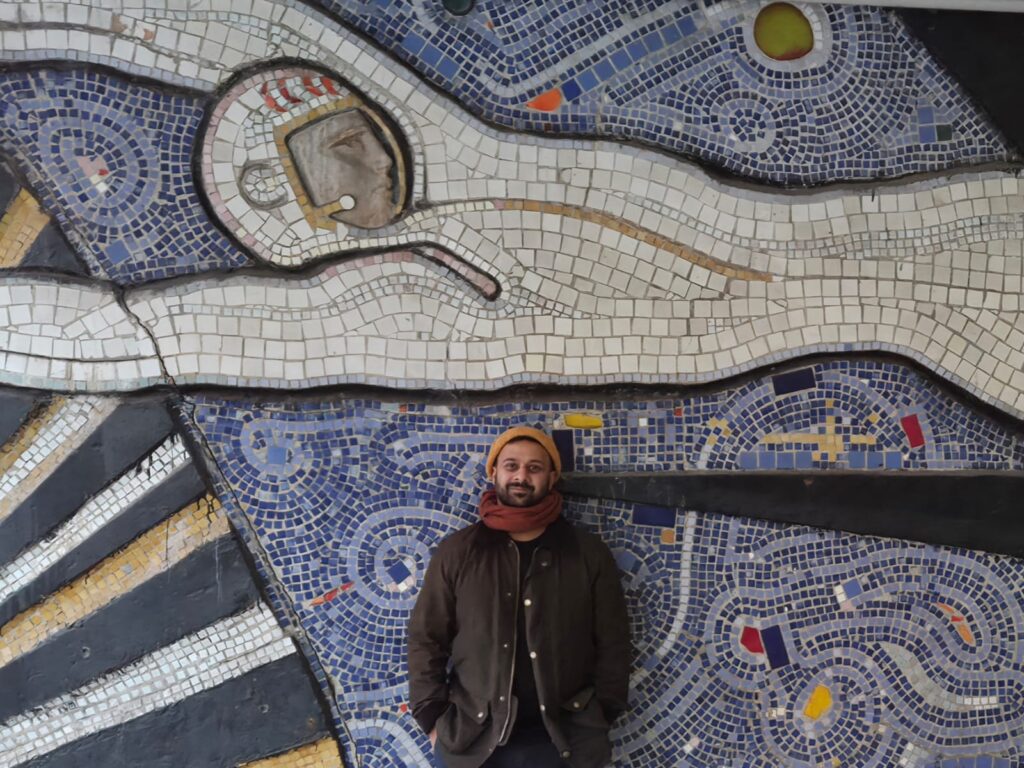
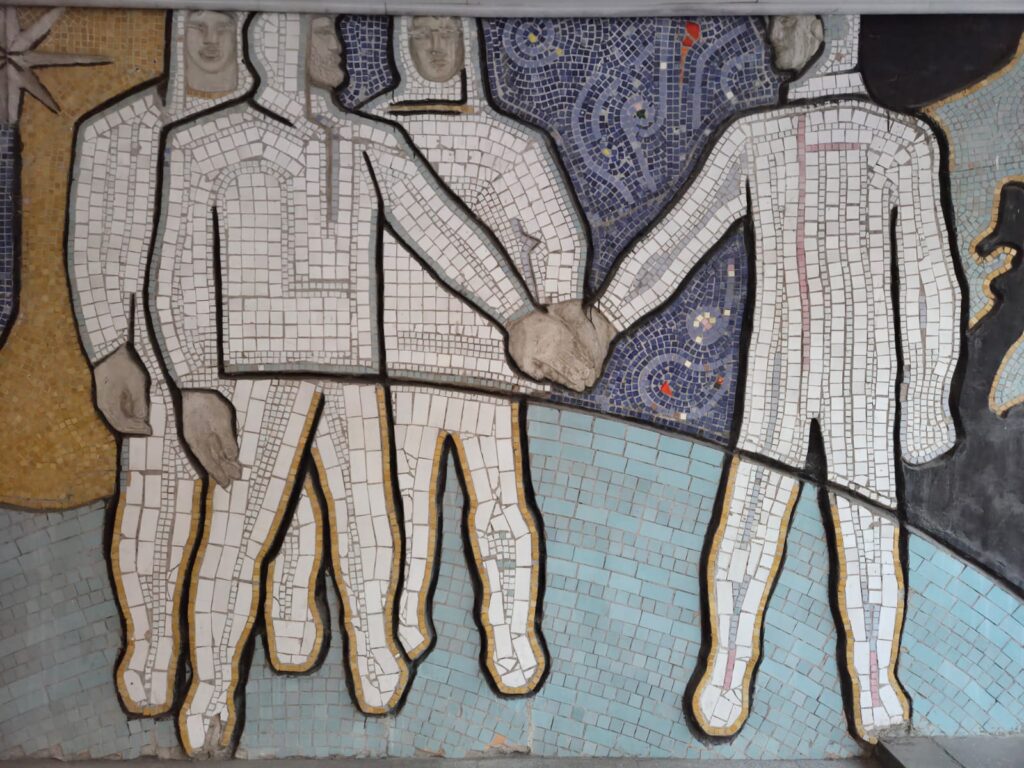
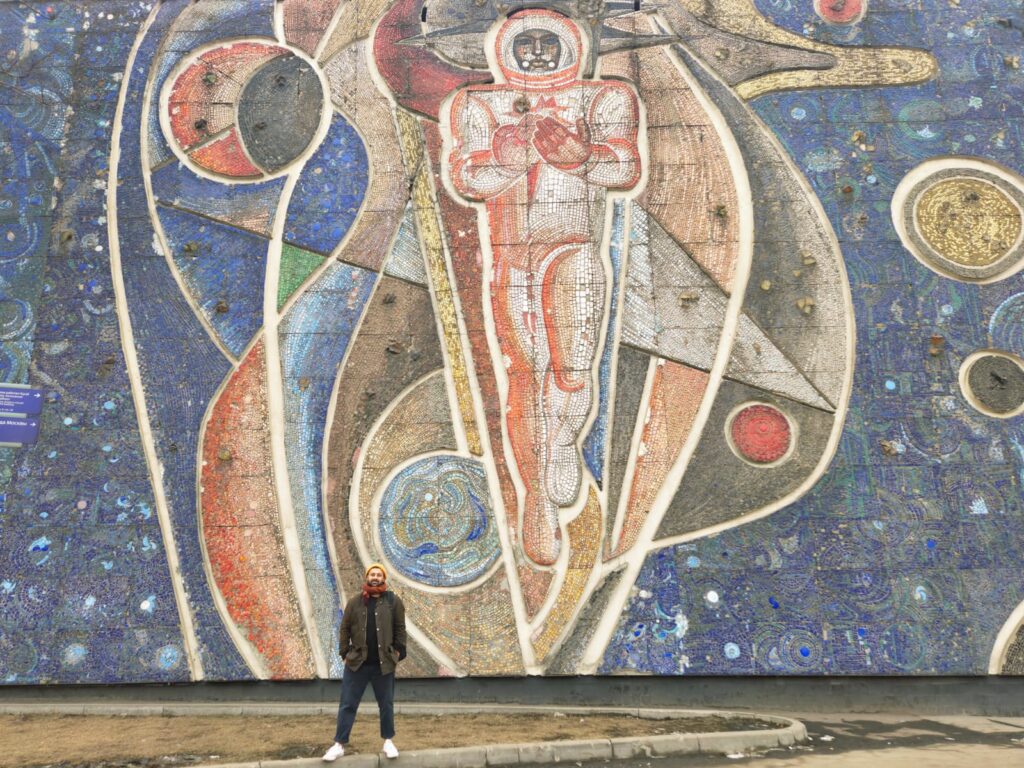
Cosmonaut Day: Key Soviet Space Achievements You Should Know
During the early Space Race, the Soviet Union led many of the world’s “firsts” in space exploration, setting milestones that reshaped science and technology.
Sputnik 1
First artificial satellite in orbit, proving spaceflight was possible.
Laika
First animal in orbit aboard Sputnik 2, demonstrating survival in space (though she died during the mission).
Yuri Gagarin
First human in space, orbiting Earth on Vostok 1.
Valentina Tereshkova
First woman in space and only woman to complete a solo mission.
Vostok 3 and Vostok 4
First multi-person (simultaneous) crewed mission.
Alexei Leonov
First spacewalk during the Voskhod 2 mission.
Luna 2
First spacecraft to reach and impact the Moon.
Salyut 1
World’s first space station, marking long-duration space habitation.
Later international milestones included cosmonauts like Pham Tuan, Jugderdemidiin Gurragchaa, Arnaldo Tamayo Méndez and Rakesh Sharma, highlighting global cooperation in Soviet missions.
These achievements show how the Soviet program consistently broke new ground, not only pushing humanity further into space and shaping global politics during the Cold War, but also inspiring a wave of iconic Soviet artwork that celebrated these milestones.
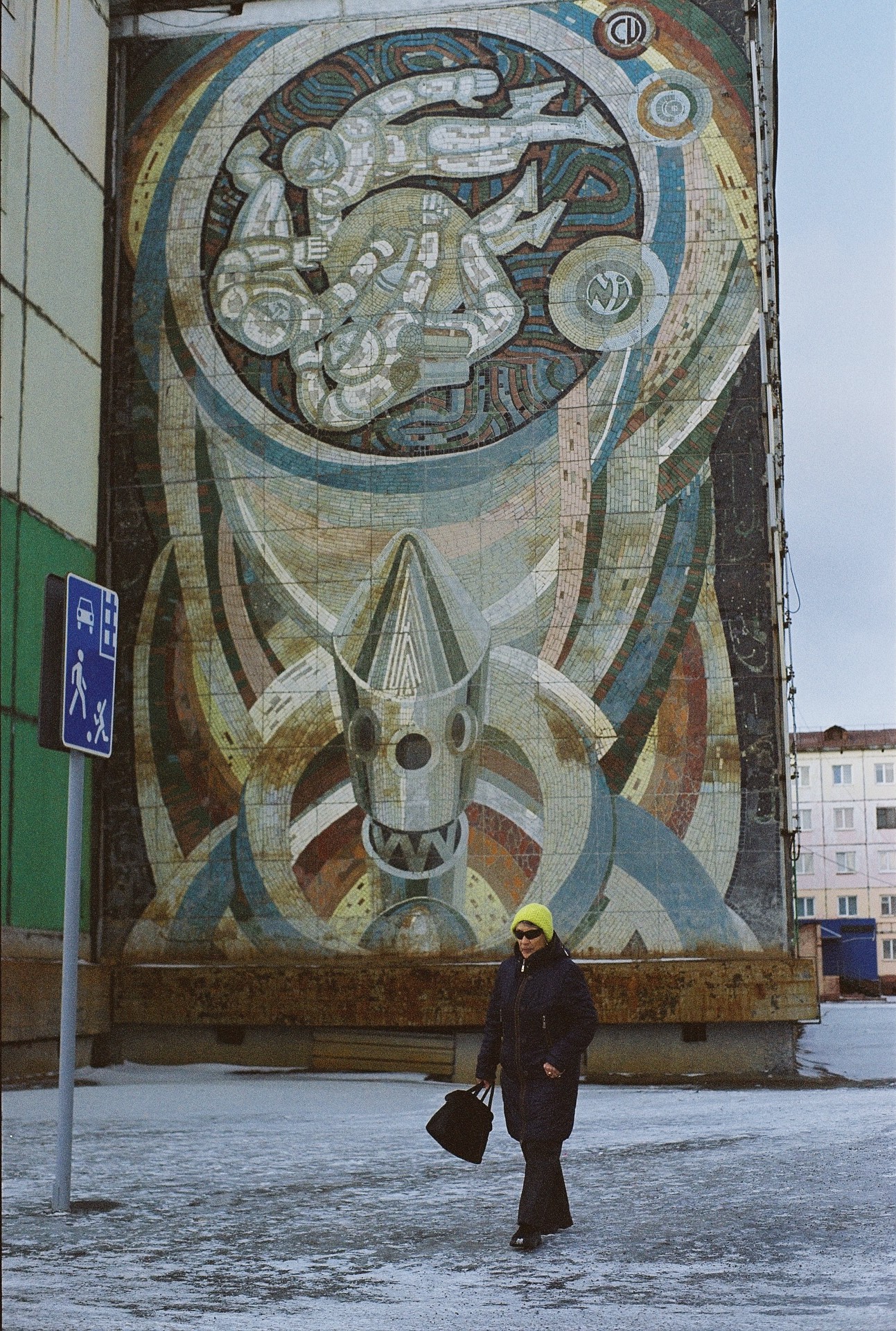
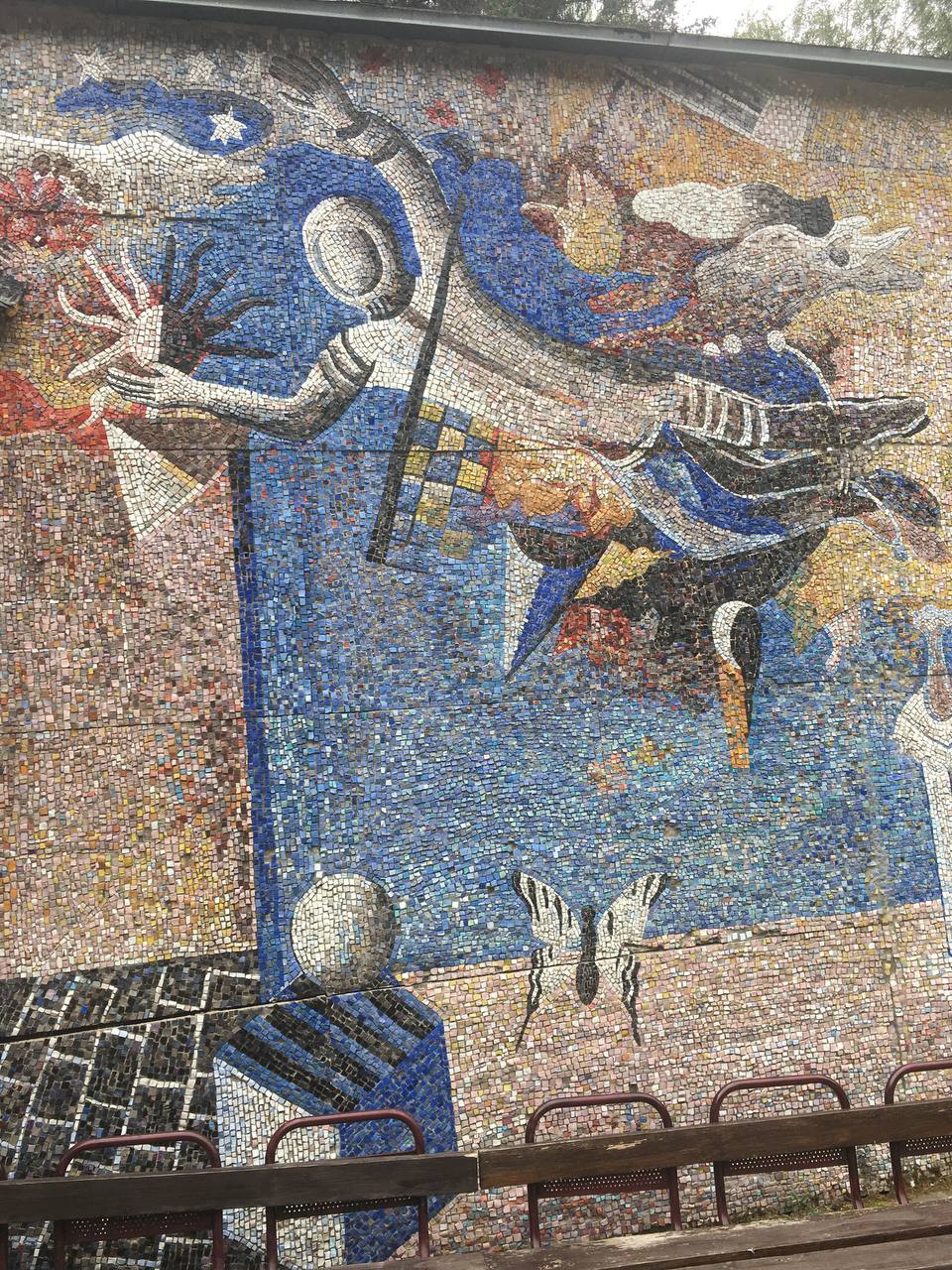
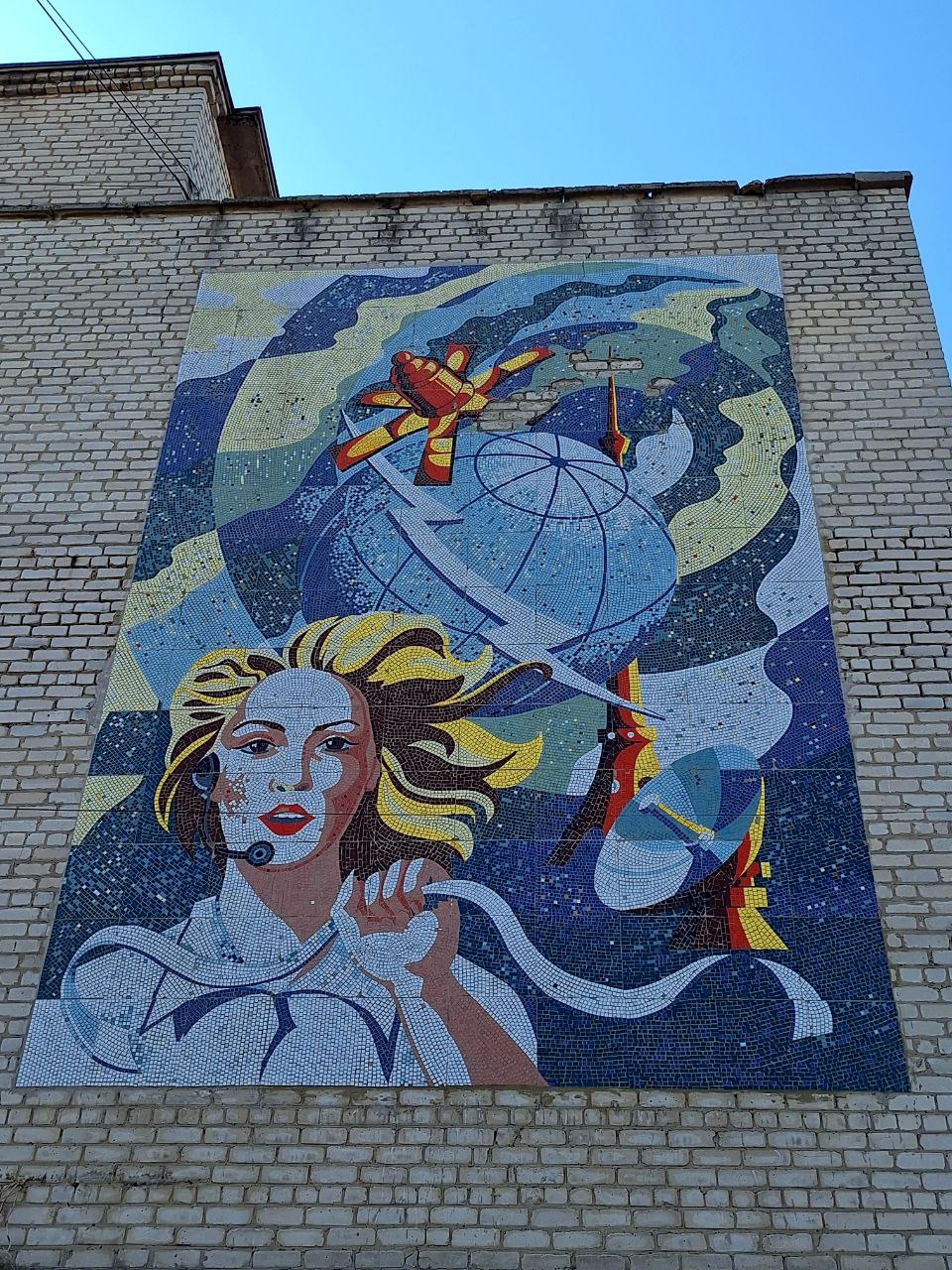
How Did Soviet Space Exploration Influence Art in the USSR?
Soviet space achievements, such as Sputnik 1 and Yuri Gagarin, became powerful symbols of progress and technological superiority, widely celebrated in posters, murals, and public art.
Rooted in Socialist Realism, artists reimagined cosmonauts as heroic, almost mythic figures appearing calm, confident, and devoted to the state, while incorporating bold, futuristic imagery to promote the USSR’s global leadership.
This influence extended beyond fine art into architecture, everyday design, and popular culture. Monumental works like the Monument to the Conquerors of Space and numerous Soviet mosaics embodied national pride, while space themes appeared on stamps, textiles, and consumer goods.
Icons such as Laika symbolised sacrifice and scientific ambition, and artists envisioned utopian futures shaped by space exploration, reflecting optimism about humanity’s place in the cosmos.

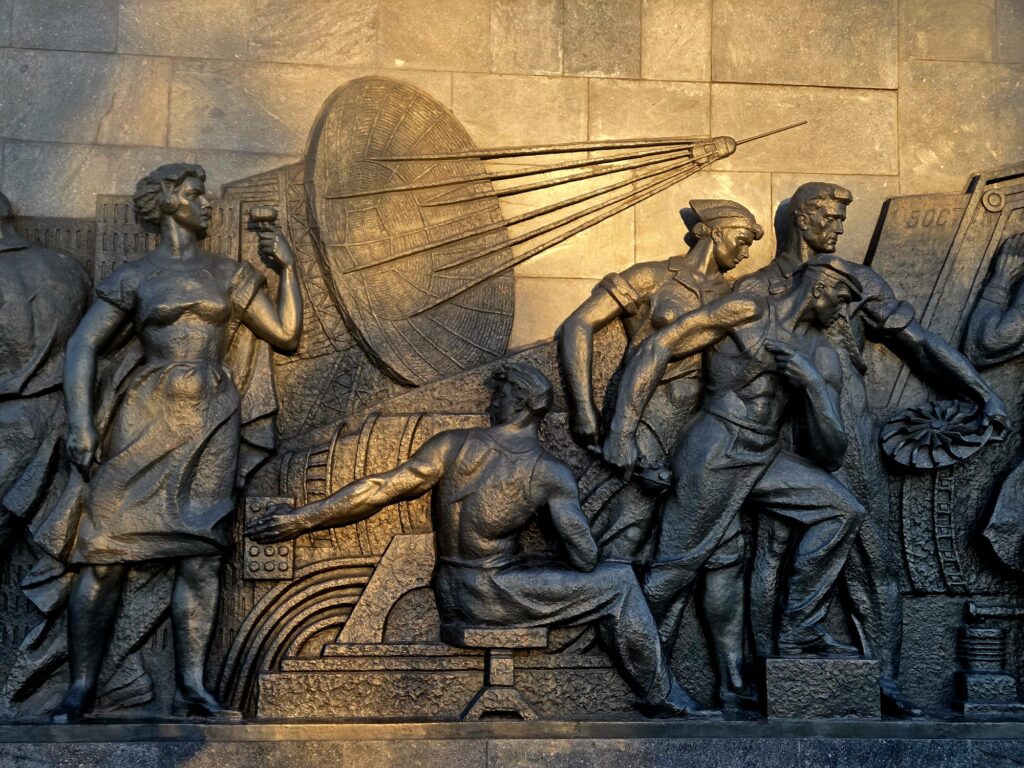
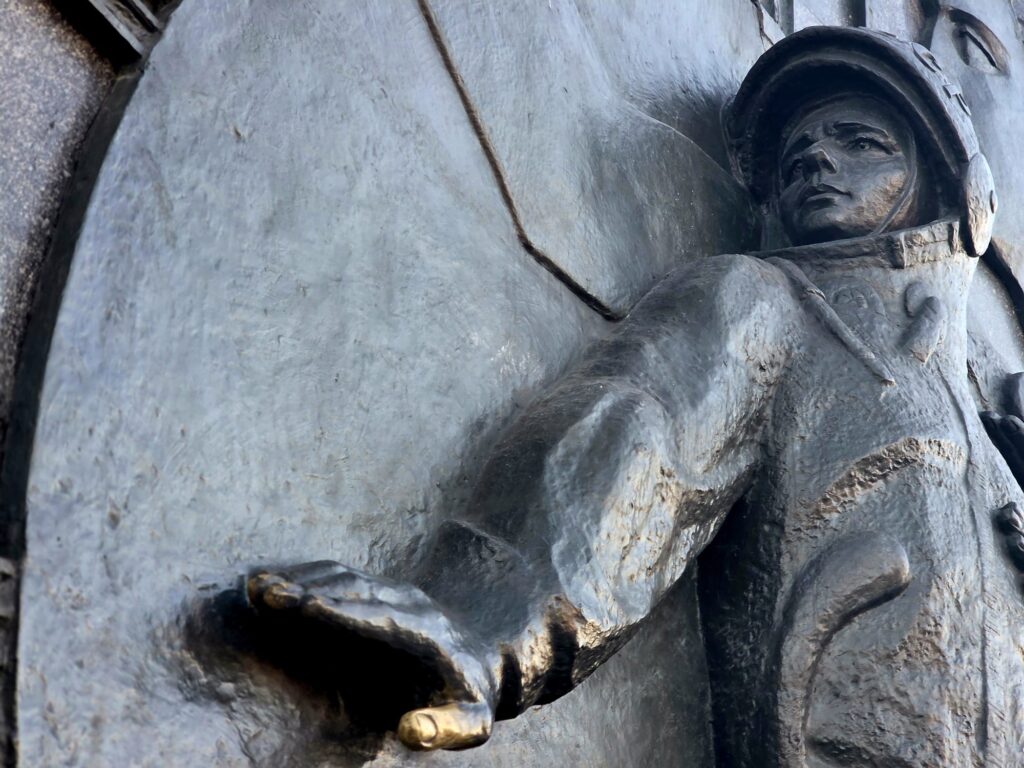
20 Iconic Soviet Space Mosaics
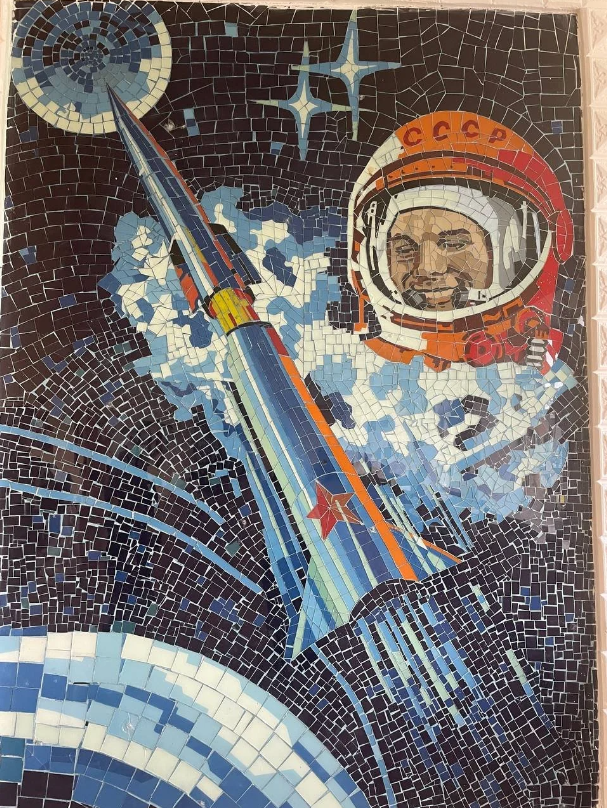
1. Yuri Gagarin in Kazakhstan
Located in the Zhitikara District (Northern Kazakhstan), this mosaic by an unknown artist depicts a smiling Yuri Gagarin alongside a rocket, positioned between Earth and the Moon, capturing the spirit of early space exploration.
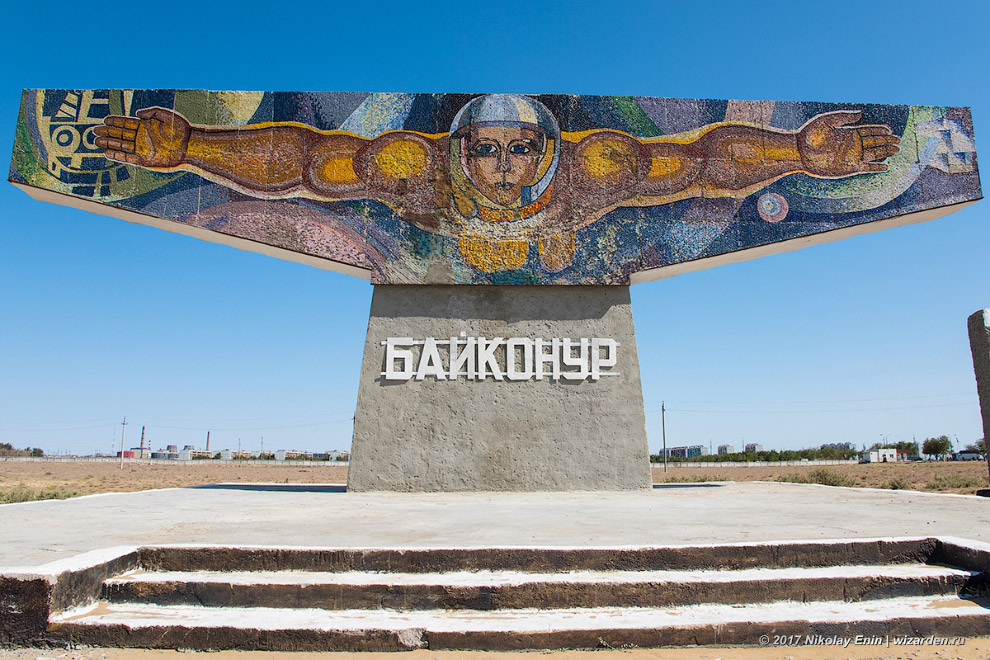
2. Baikonur Cosmonaut
Unknown artist, iconic mosaic depicting a cosmonaut at Baikonur. These are subsequently among the Soviet mosaics that few people have had the chance to see.
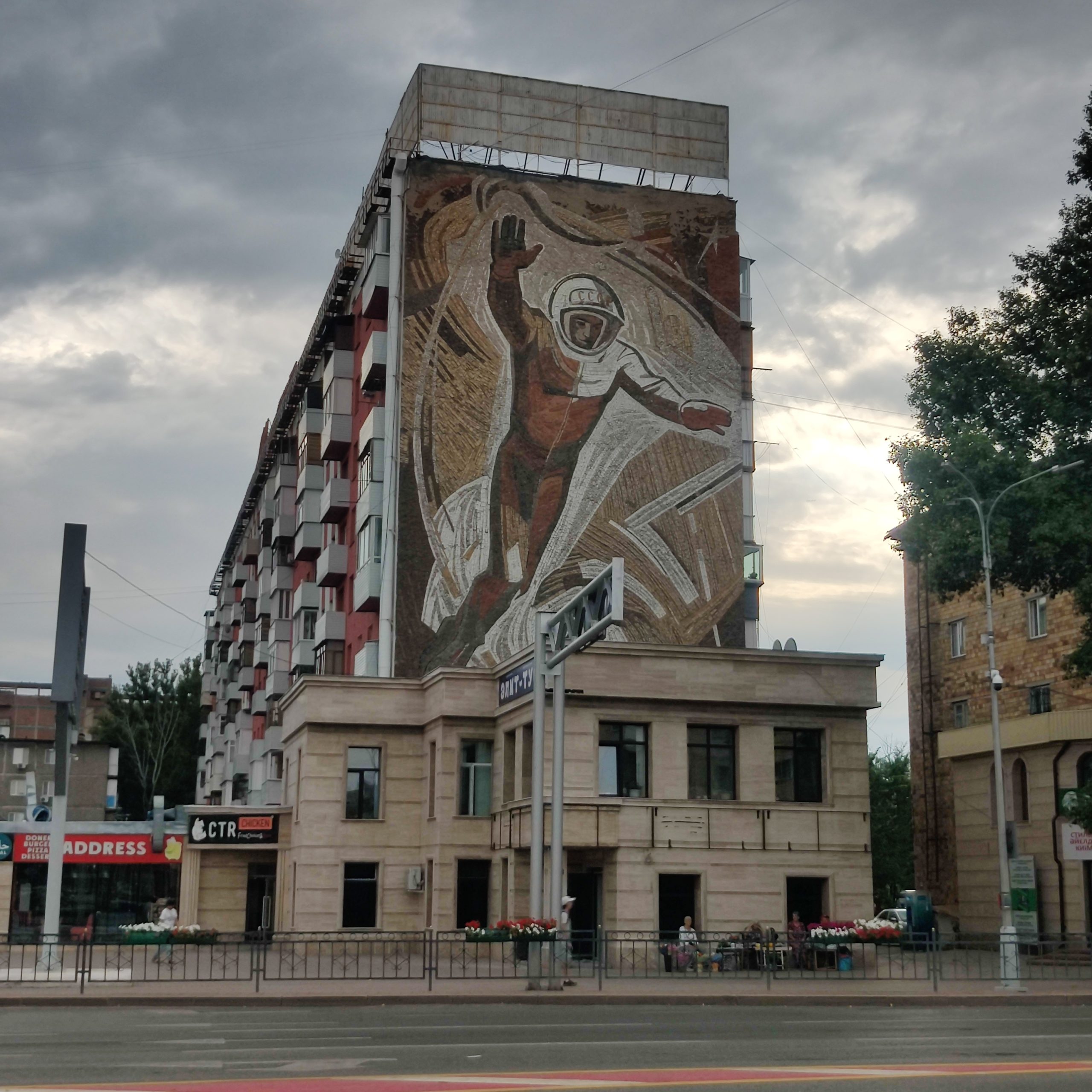
3. Karaganda Cosmonaut
Large-scale mosaic of a cosmonaut, most likely portraying Yuri Gagarin, adorning the side of a building, artist unknown. It’s one of the most iconic Soviet mosaics in Kazakhstan.
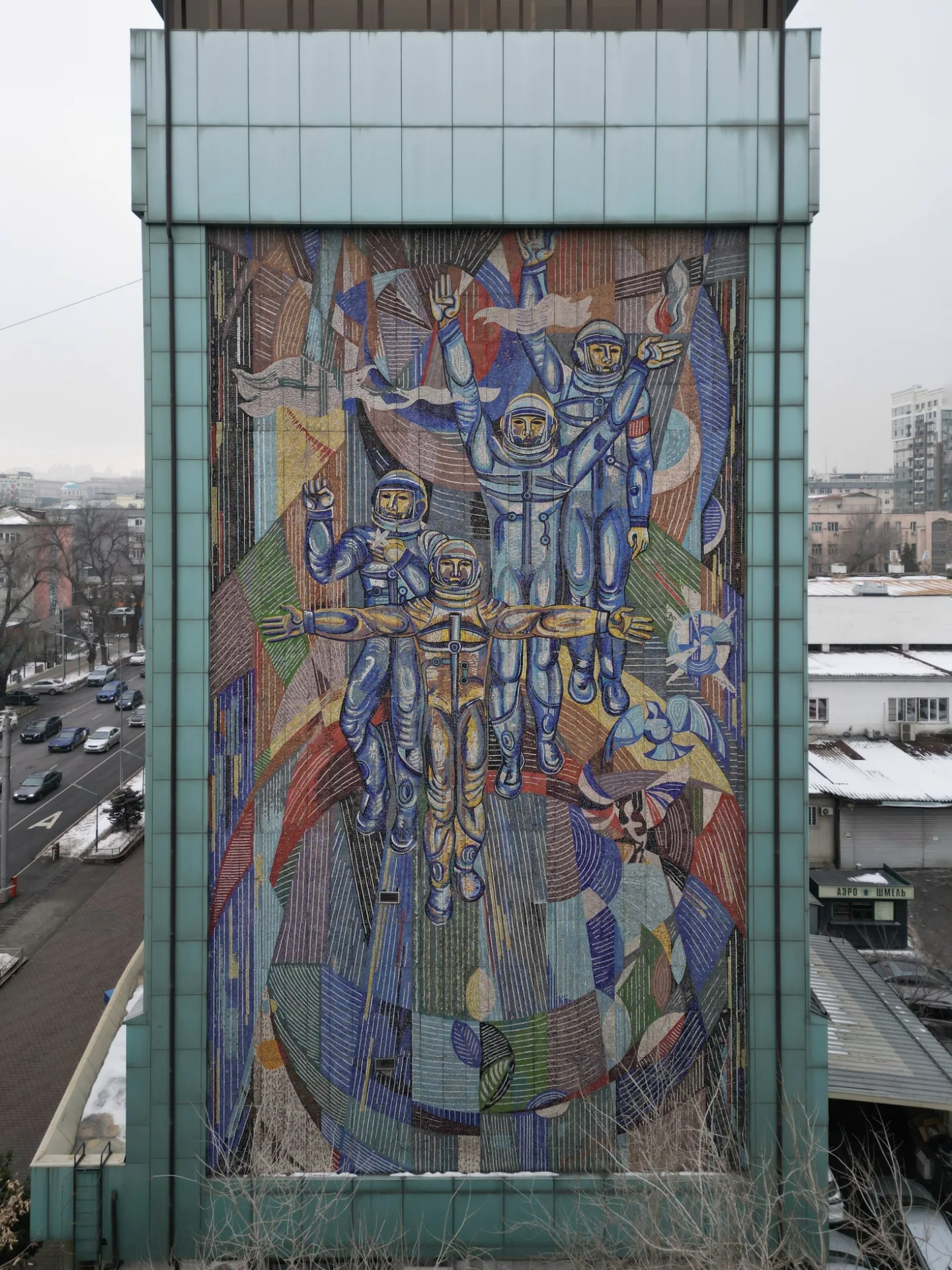
4. Almaty Cosmonauts
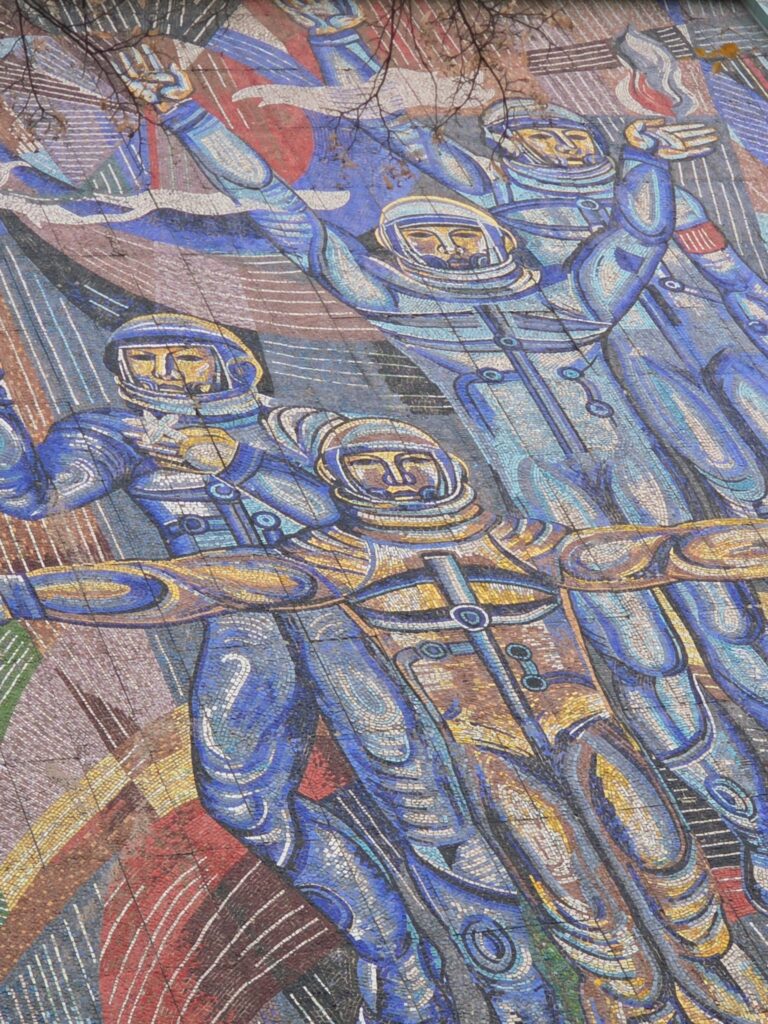
Created in 1985 by Baktykan Kabidoldanov, this large-scale mosaic depicts cosmonauts floating weightlessly, evoking the sensation of freedom from gravity.
5. Tashkent Cosmonaut (Uzbekistan)
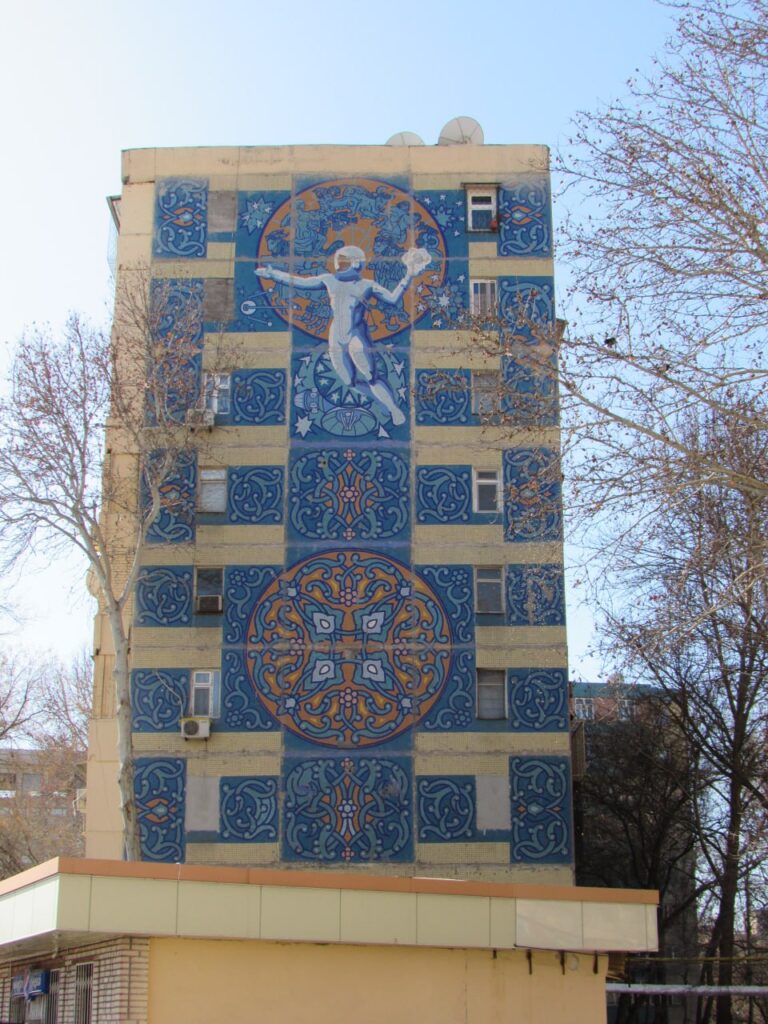
Created in 1976 by Nikolay Zharsky, this mosaic depicts a cosmonaut floating above the zodiac symbols, intertwined with an intricate vine motif.
6. Zarafshan Mosaic
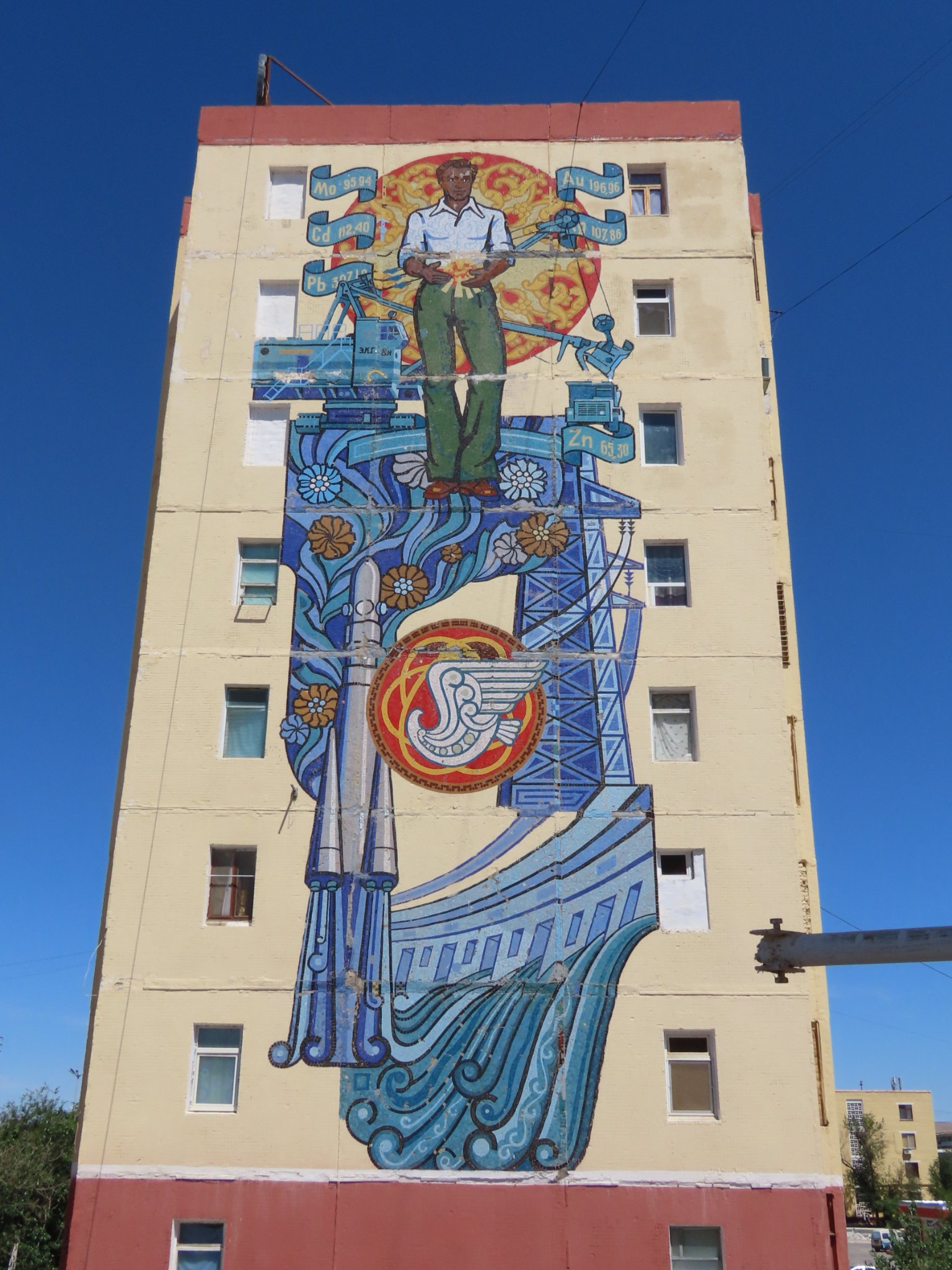
Located in Zarafshan, this large-scale mosaic—created in the distinctive Tashkent style—depicts a central male figure presiding over symbols of technological progress, including a hydroelectric dam, industry, and a rocket, all spread across the side of a building. The work is possibly attributed to the Zharsky brothers (Pyotr, Nikolay and Alexander.
7. Baku Cosmonauts (Azerbaijan)
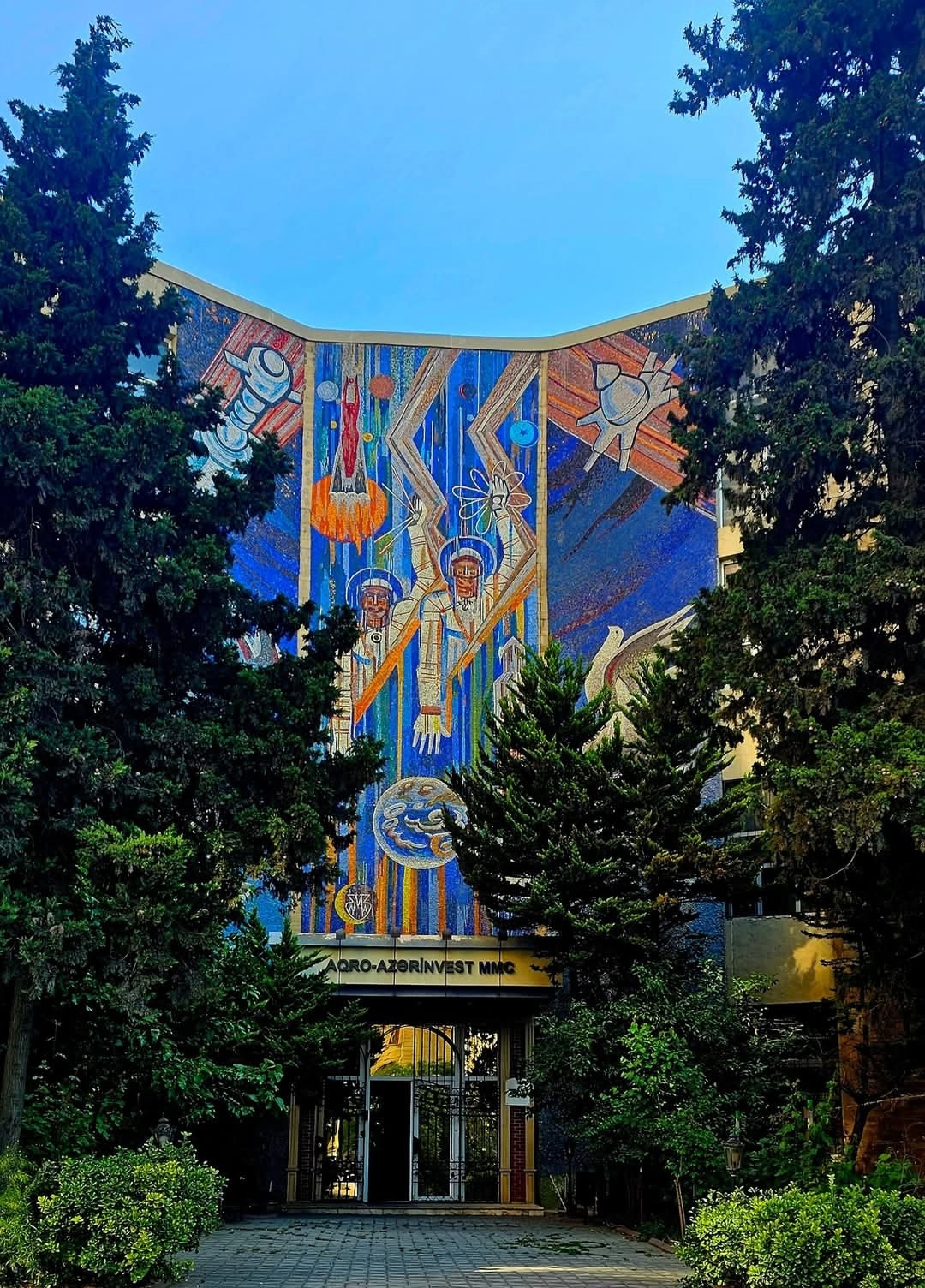
Created by Elmaz Guseinov, this striking large-scale mosaic vividly portrays cosmonauts alongside a space station and satellite, spreading across the building in a bold and colourful composition.
8. Progress (Armenia)
Created by Karen Aghamyan in 1983. This distinctive mosaic features a floating cosmonaut alongside Vitruvian Man and a male figure with wings, blending space-age imagery with classical human proportions. What makes the piece especially unique is its survival through building restoration; it remains fully preserved and on display inside a coffee shop Yerevan.
9. Hirtopul Mosaic (Moldova)
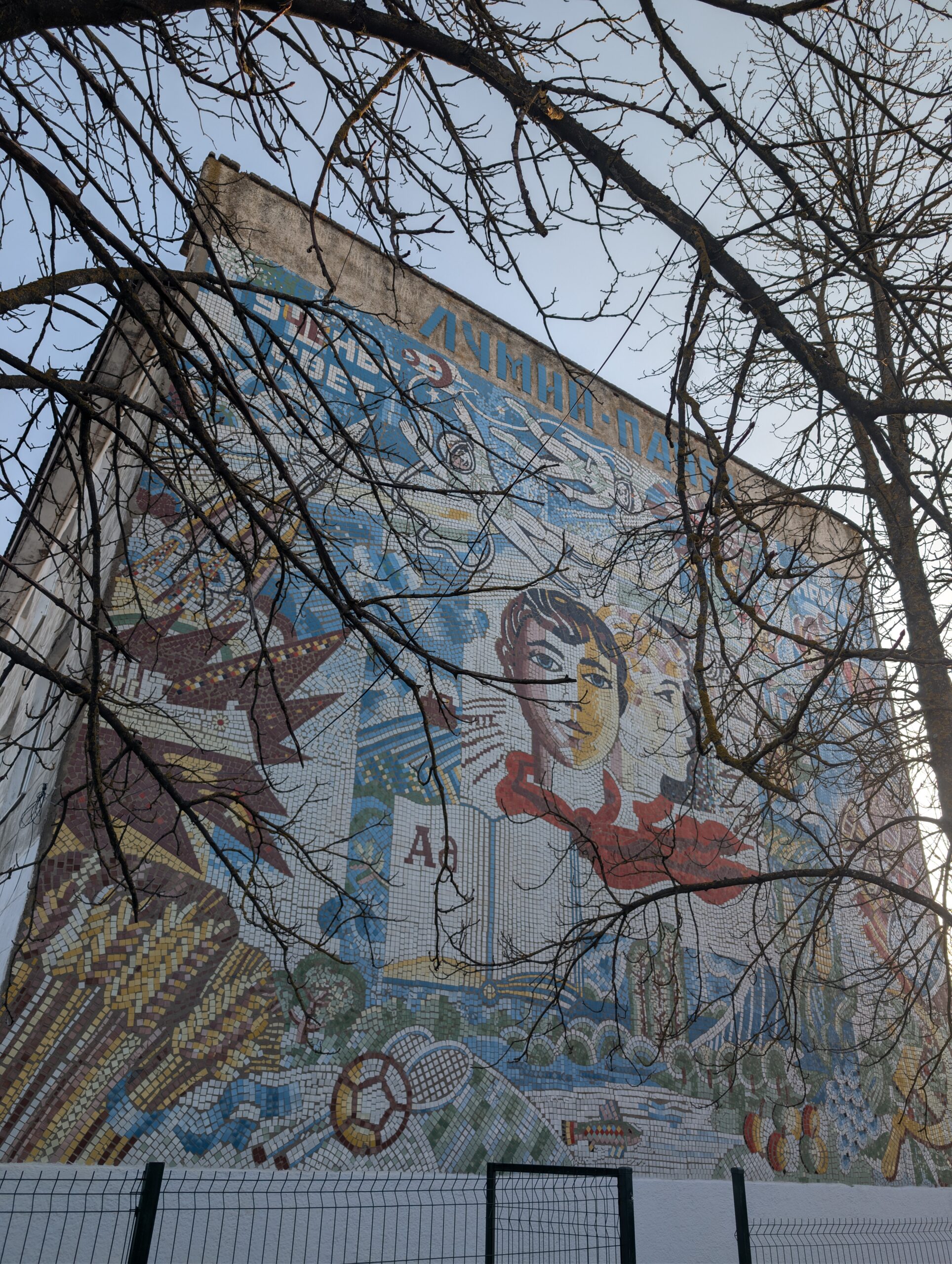
Artist unknown. Located in Moldova at Hirtopul, this mosaic celebrates Soviet youth and progress, depicting two Young Pioneers surrounded by cosmonauts, spacecraft, industry, and agriculture.
10. Towards Life (Ukraine)
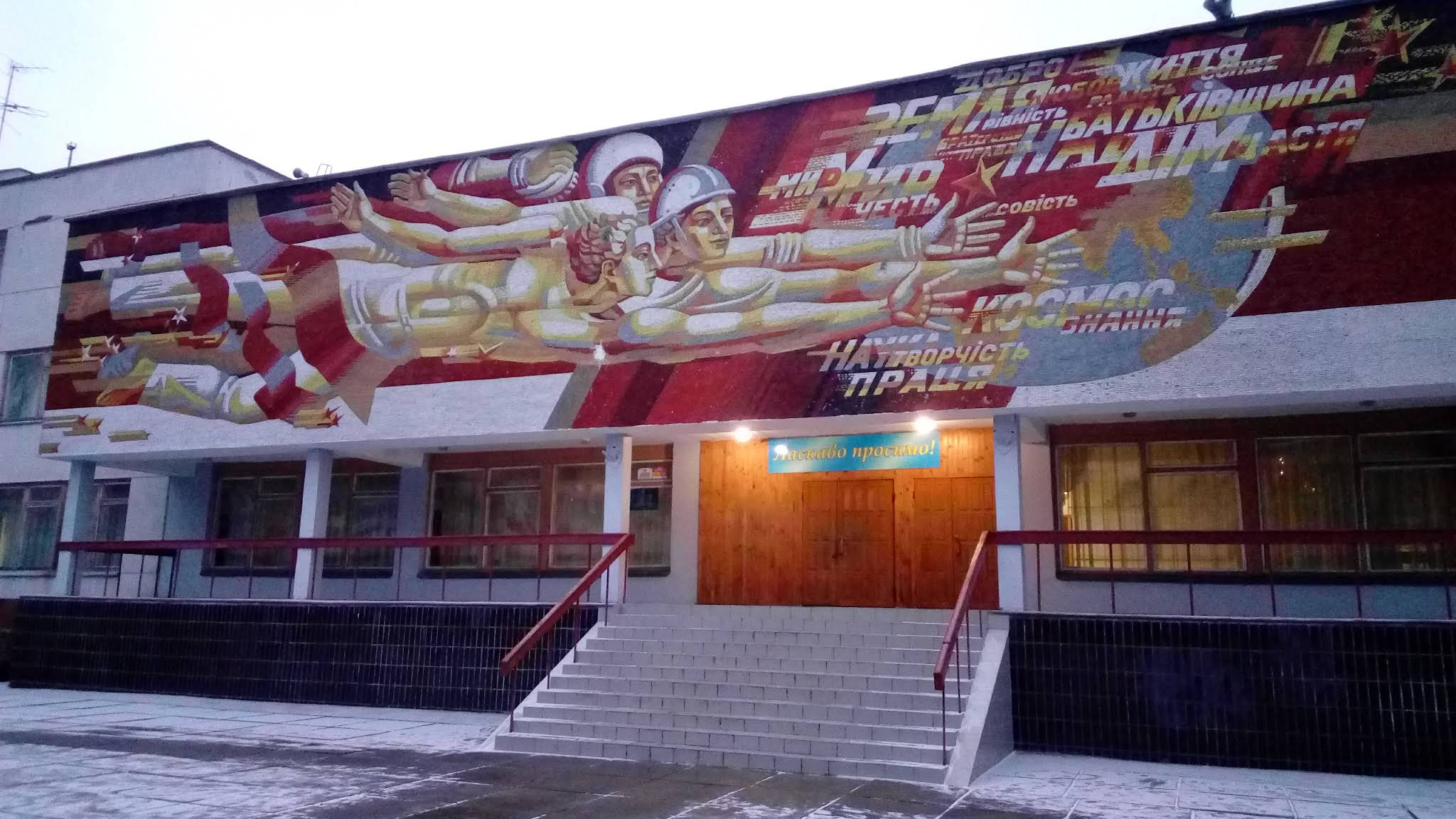
Created in 1986 by Volodymyr Pryadka, Volodymyr Pasyvenko, and Olena Volodymyrova, this detailed mosaic depicts a cosmonaut, a worker, and a man in white trousers flying toward Earth, with Ukrainian text across the façade of a school. The work has been partially altered following decommunization.
11. Kryvyi Rih Relief Mosaic
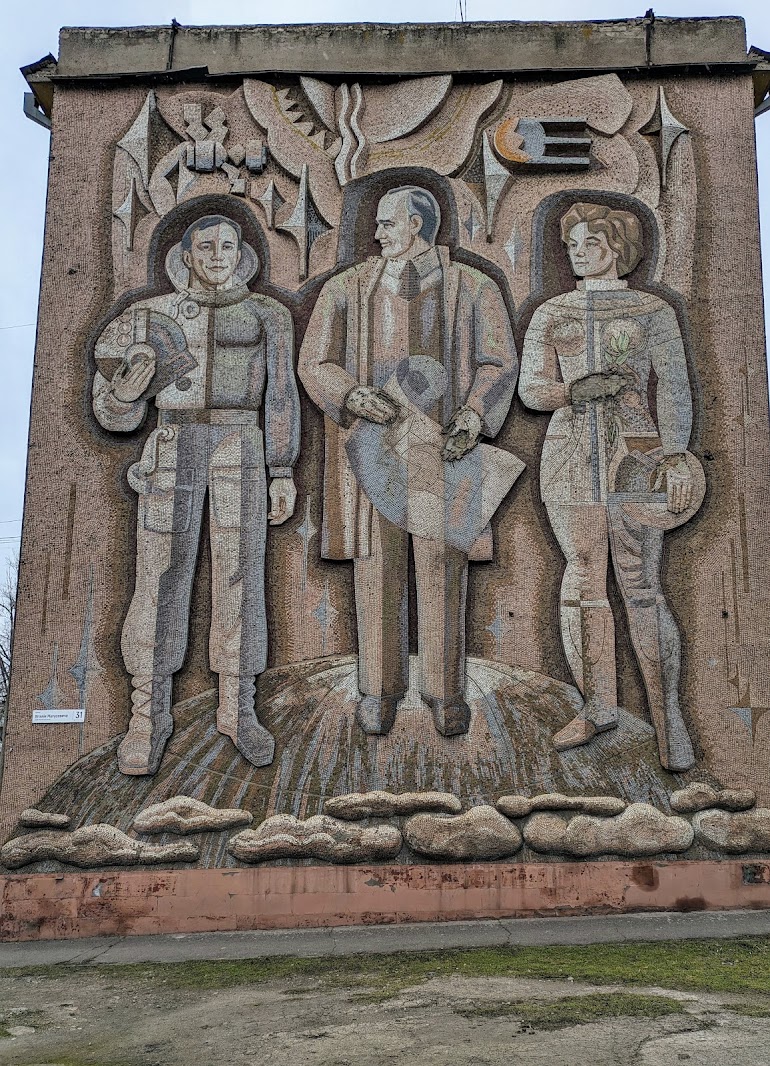
Located in Kryvyi Rih, this mosaic depicts Sergei Korolev, the father of the Soviet space program, alongside male and female cosmonauts, likely Yuri Gagarin and Valentina Tereshkova, celebrating the achievements of early space exploration.
12. Lysychansk House of Culture
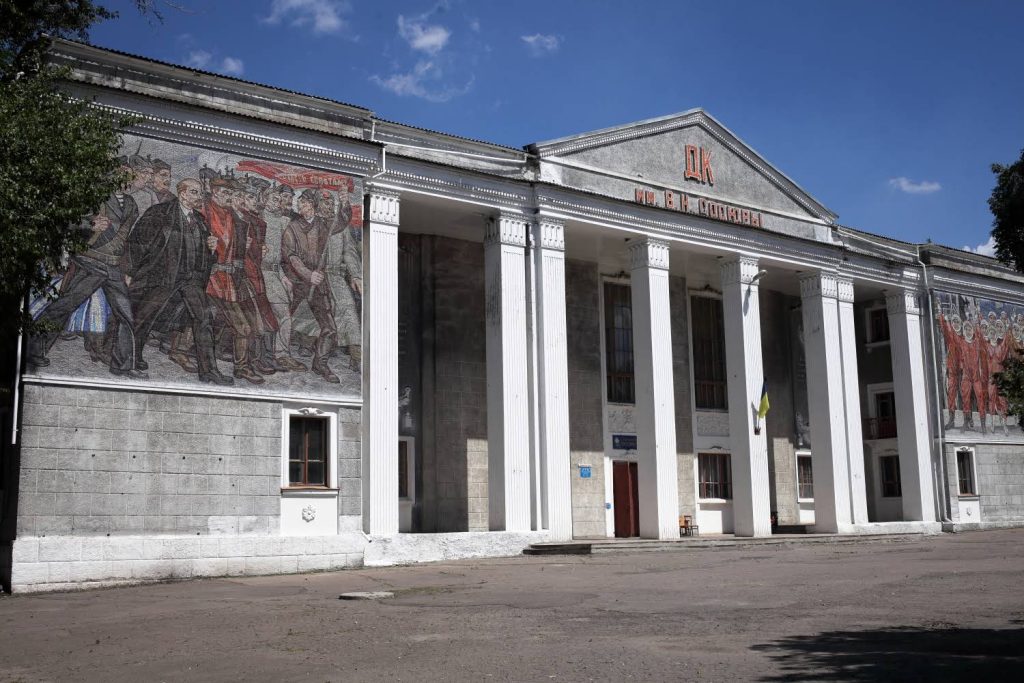
A pair of mosaics on the façade of a building: the left panel depicts Vladimir Lenin surrounded by a crowd of revolutionaries, while the right panel shows a group of cosmonauts. At the time of writing, the site is not accessible for visits.
13. Man and Stars (Russia)
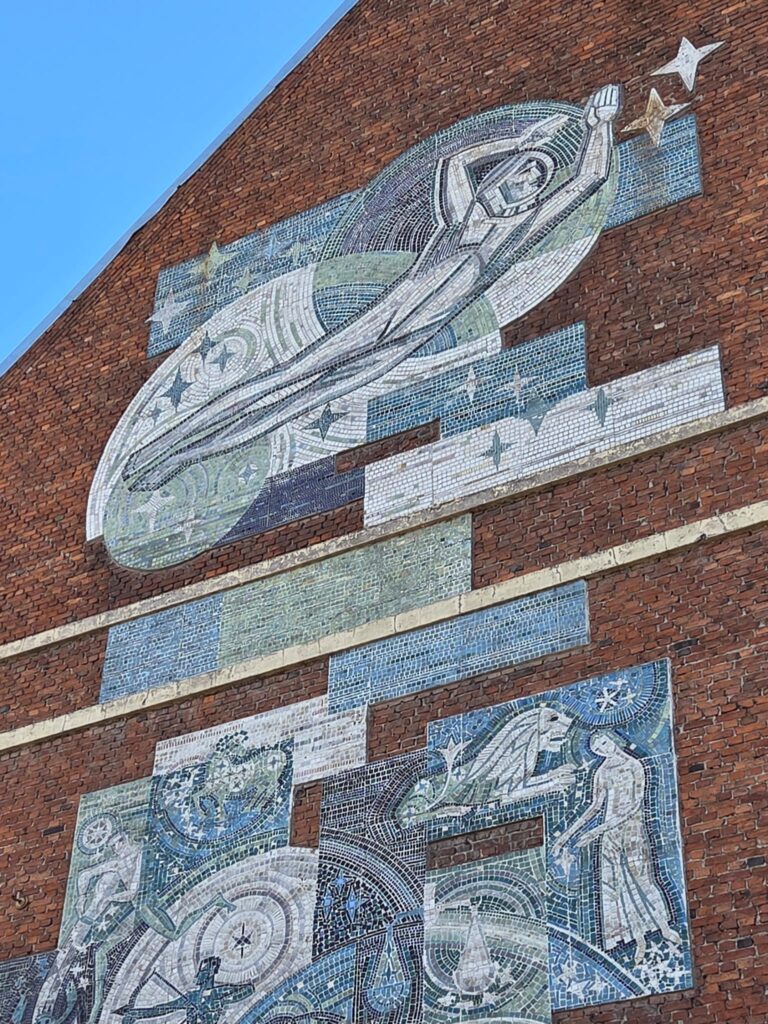
Located in the heart of Saint Petersburg, this mosaic by Valentina Anopova depicts a cosmonaut soaring above the zodiac signs, blending space exploration with celestial symbolism.
14. Ulan-Ude Airport
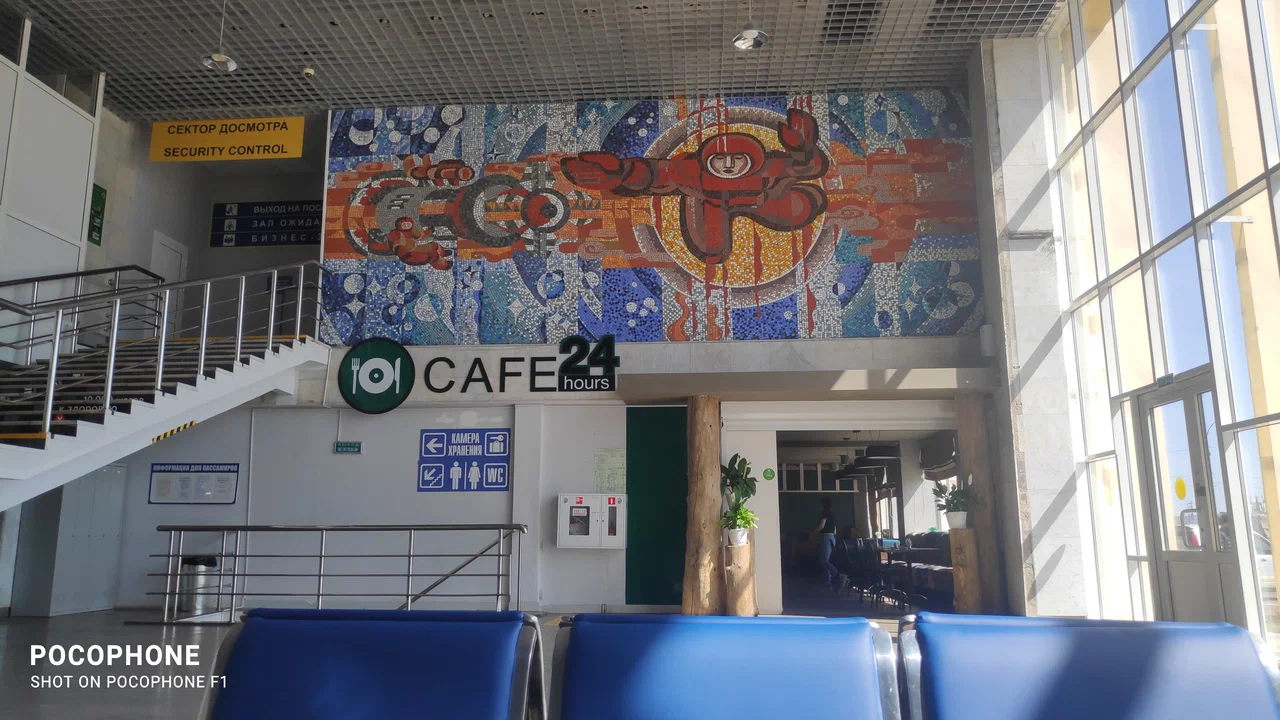
Created in 1983 by D. Ulanov, this series of mosaics located inside Ulan-Ude Airport (Baikal Airport) features a dynamic depiction of a cosmonaut navigating through the cosmos. The city of Ulan-Ude has also been frequently visited by Valentina Tereshkova.
15. The Triumph of Socialism
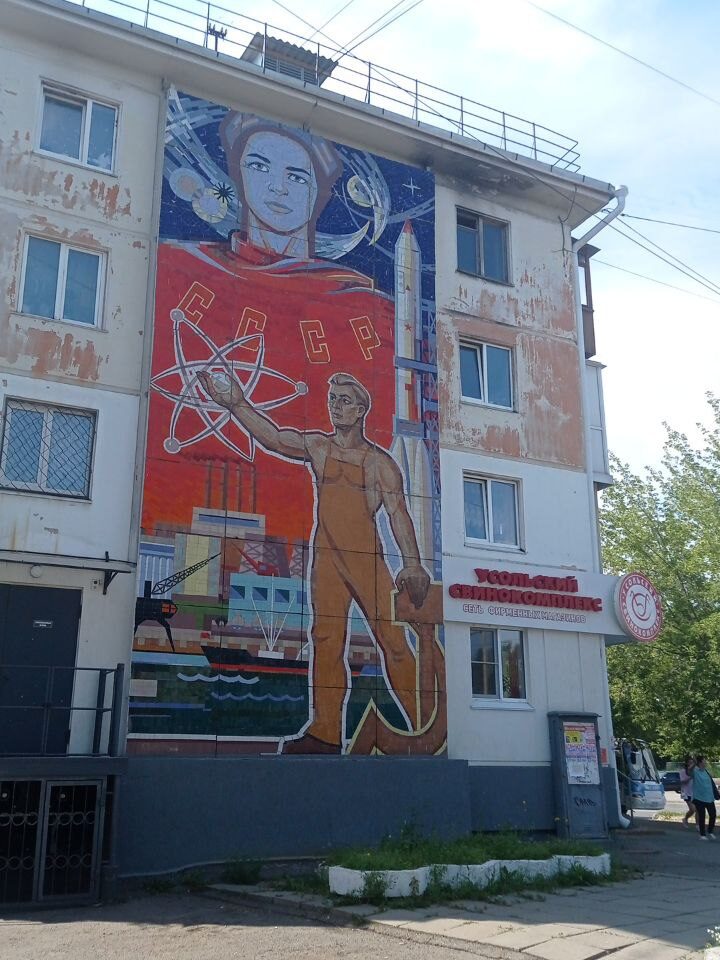
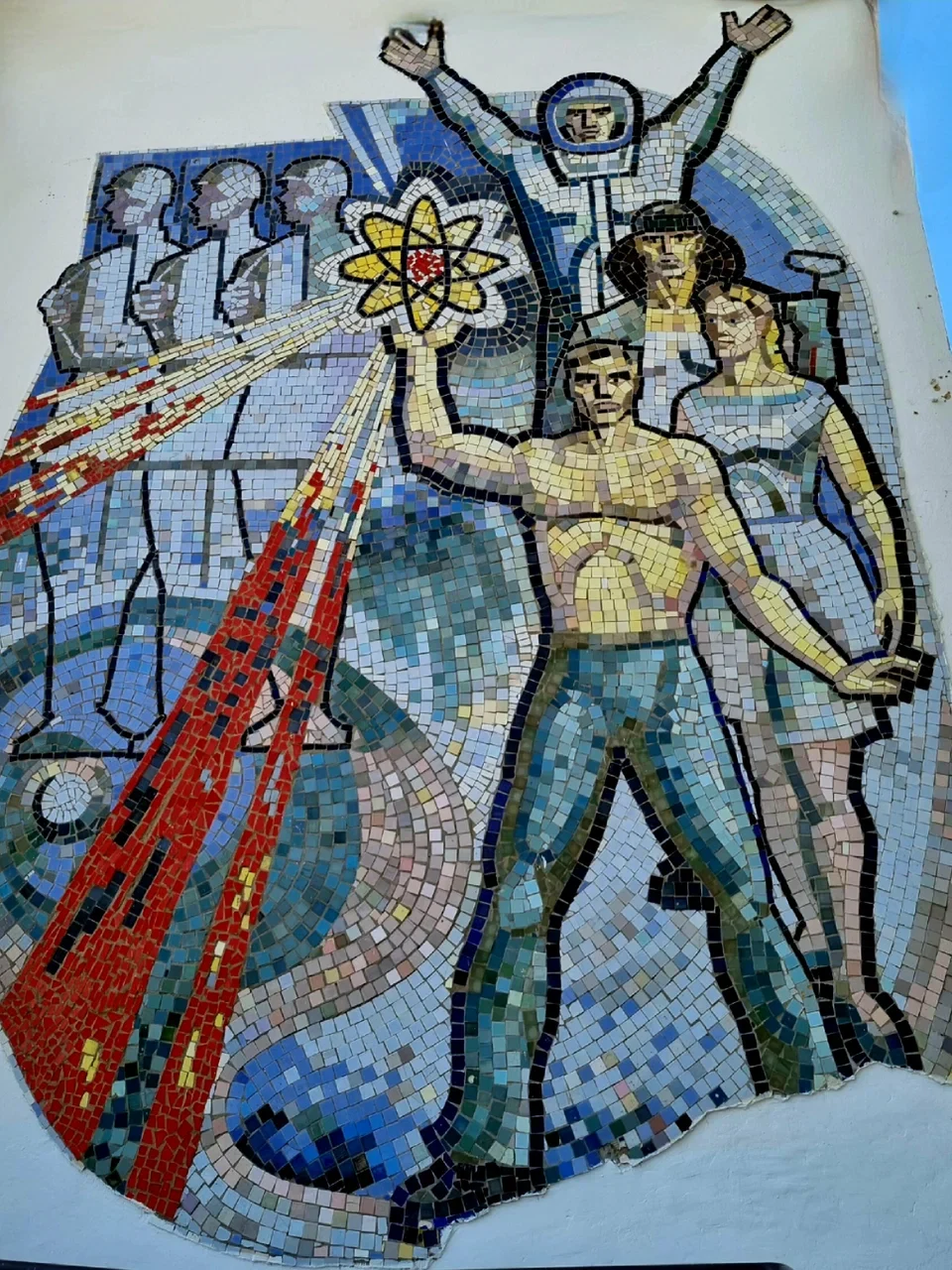
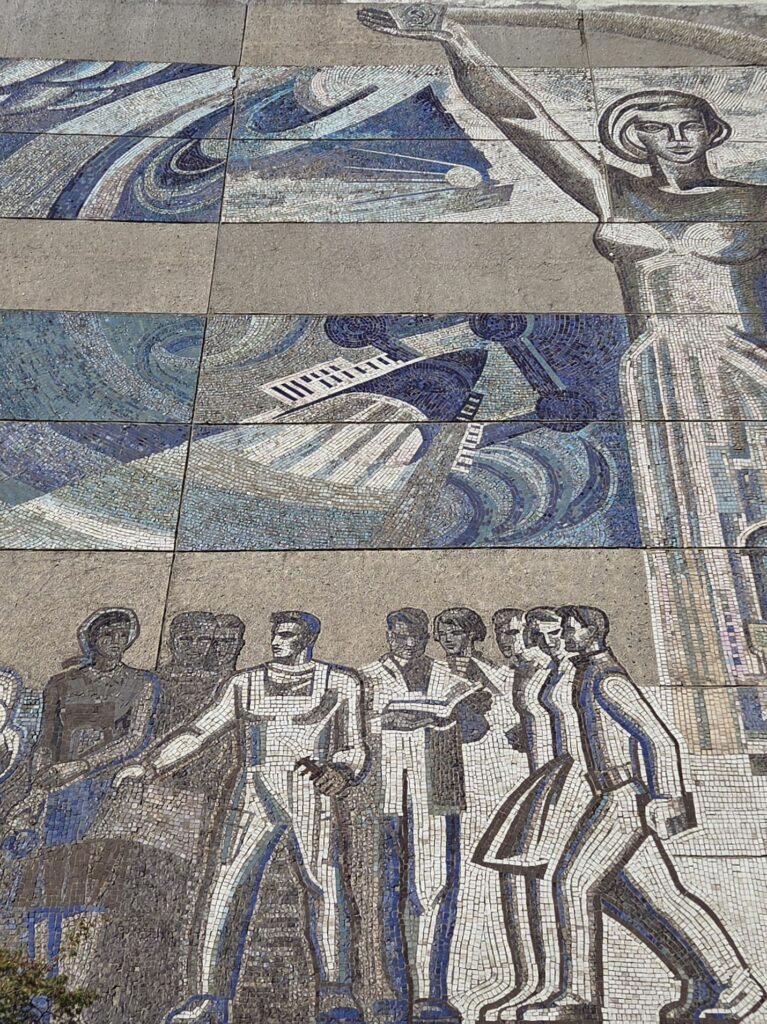
Created in 1970 by Konstantin Voyevodin, this mosaic depicts a worker holding an atom, with a cosmonaut and rocket in the background. It symbolises the collective effort behind sending cosmonauts into space and the unity of science, industry, and exploration. Located near is the Conqueror of the Cosmos.
16. Tambov Mosaic
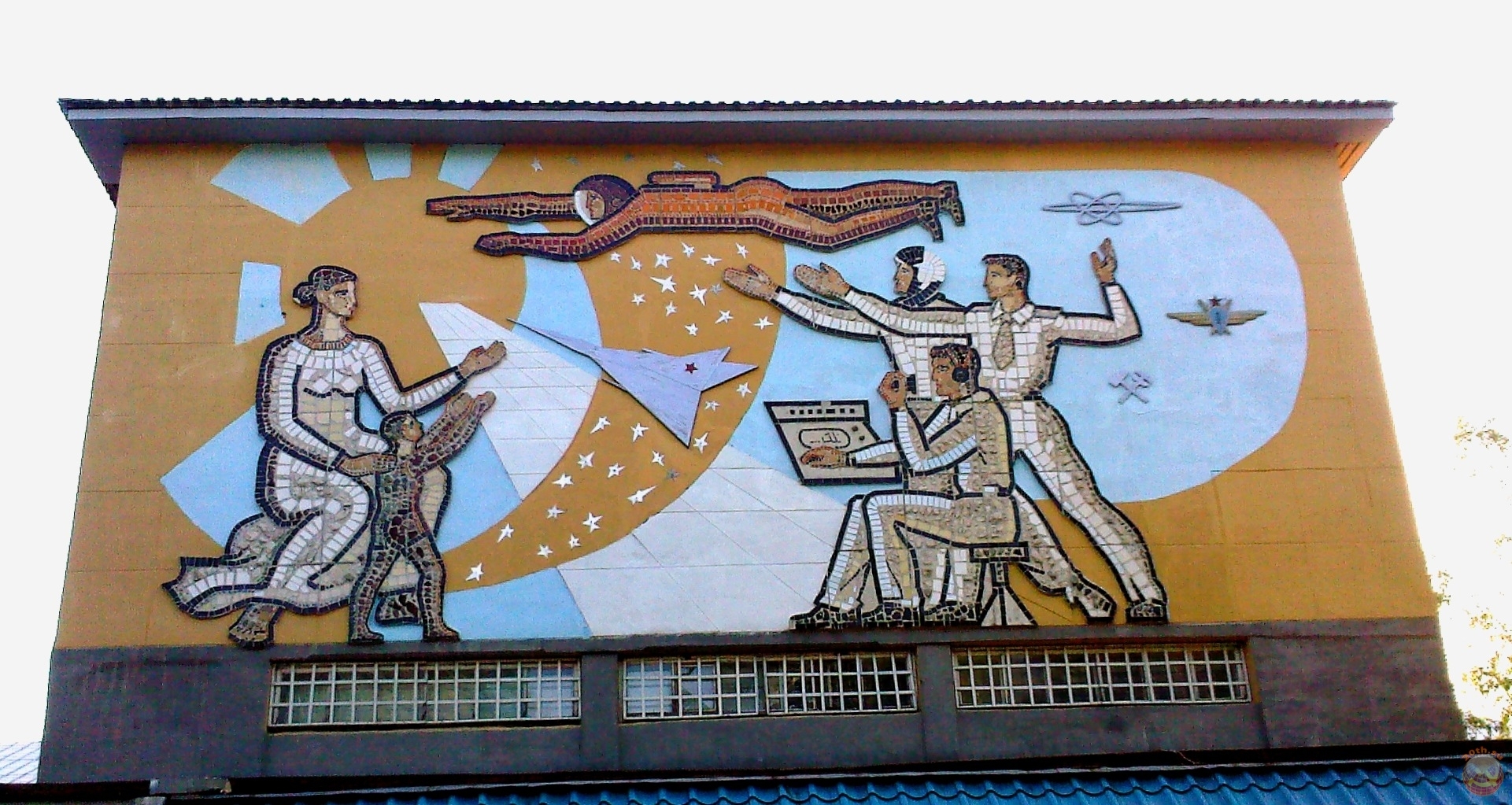
Artist unknown, this mosaic depicts Soviet citizens looking up as a cosmonaut soars above the building, alongside figures of scientists and an idealised “atomic family,” symbolising progress, science, and collective achievement.
17. Pushkino Mosaic
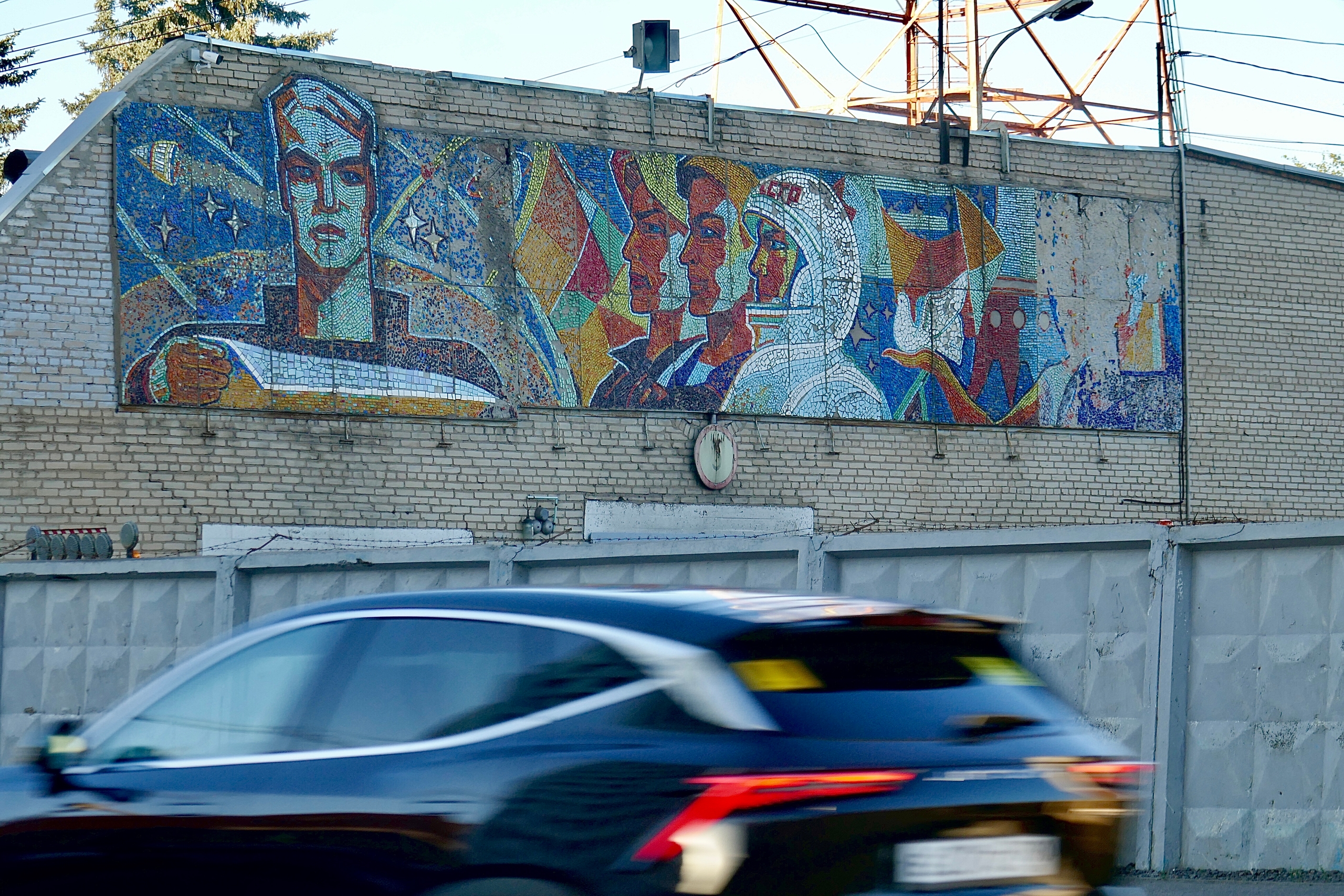
Artist unknown, this mosaic on the side of a building depicts workers and a cosmonaut alongside a space module orbiting Earth, symbolising industry, science, and humanity’s reach beyond the planet.
18. Dorokhovo House of Culture
Artist unknown, this pair of façade mosaics shows Soviet soldiers on the left panel, and on the right, a figure holding an atom, with cosmonauts and workers in the background, an allegory of military strength, science, and industrial progress.
19. Space
Located on the outskirts of Moscow, this large wall mosaic by Yuriy Korolyov sits beside a bus stop and depicts a soaring cosmonaut. It’s often overlooked by Muscovites on their daily commute.
20. Soviet People, Conquerors of Space
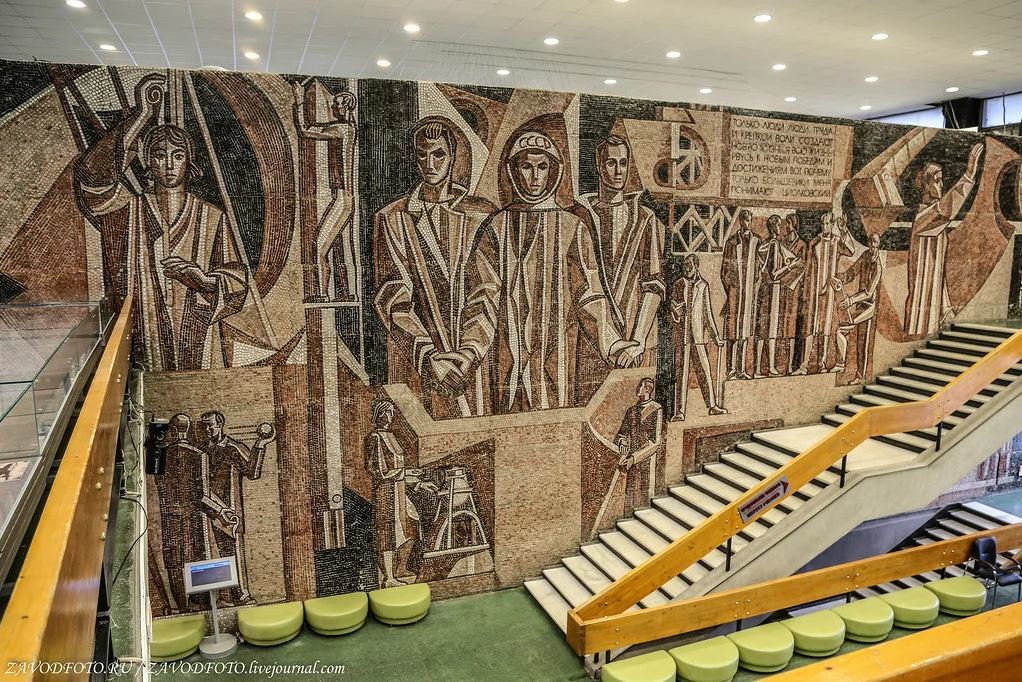
Created between 1966–1967 by Andrei Vasnetsov, this smalt panel is located in the Tsiolkovsky State Museum of the History of Cosmonautics, the world’s first museum dedicated to space exploration, opened in 1967.
The composition commemorates the scientific research and collective effort that led the Soviet Union to become the first nation in space, with cosmonauts as its central figures. It also includes a quotation from Konstantin Tsiolkovsky, emphasising labour, determination, and ideological alignment, underscoring the strongly political dimension of the work.
Why We Should Celebrate Cosmonautics Day and Appreciate Its Artistic Legacy
The Space Race between the U.S. and the Soviet Union was sparked by the launch of the Sputnik 1: a 23-inch polished metal sphere with external antennas. This historic moment marked the beginning of rapid advancements in space exploration, driven by ambition, competition, and difficult lessons learned along the way.
Over time, these achievements evolved into something far greater than rivalry. Today, Cosmonautics Day is celebrated not only as a tribute to Soviet pioneers but as a symbol of shared human progress. Across the former Soviet Union, space achievements were immortalised in striking mosaics, murals, monuments, and public artworks that still stand today as reminders of this extraordinary era.
These works of art did more than celebrate national pride; they helped unite people through a common vision of exploration and discovery. In many ways, the legacy of Soviet space exploration transcends politics, reflecting a moment when humanity as a whole looked upward together, inspired by the possibility of the cosmos.

Discover Soviet Space Mosaics
Our project has mapped quite a few monumental artworks depicting space exploration across the former USSR. Using our Interactive Map, you’ll be able to find them, view them, and navigate to them easily!
If you’d rather join a guided adventure, several guides or tour operators, such as by Ravi Mistry, the author of this blog post, offers unique opportunities to explore former Soviet regions with experts who know their history and hidden corners.
What are your favourite space-related Soviet mosaic? Did we miss any? Drop your suggestions in the comments!
Leave a Reply