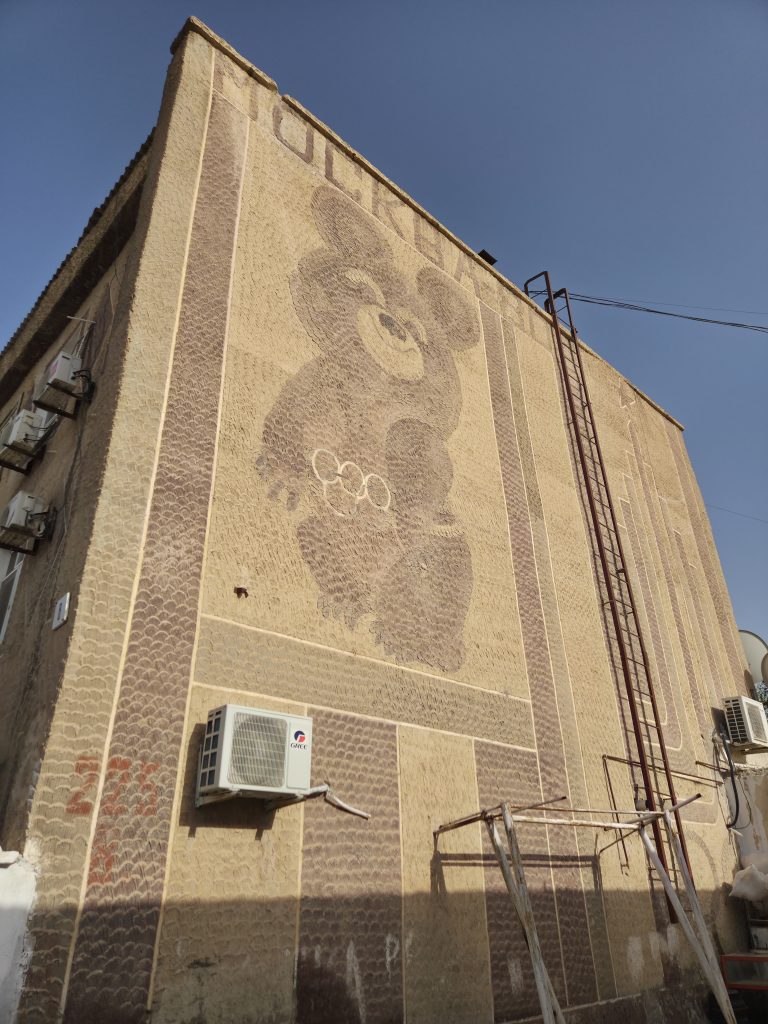
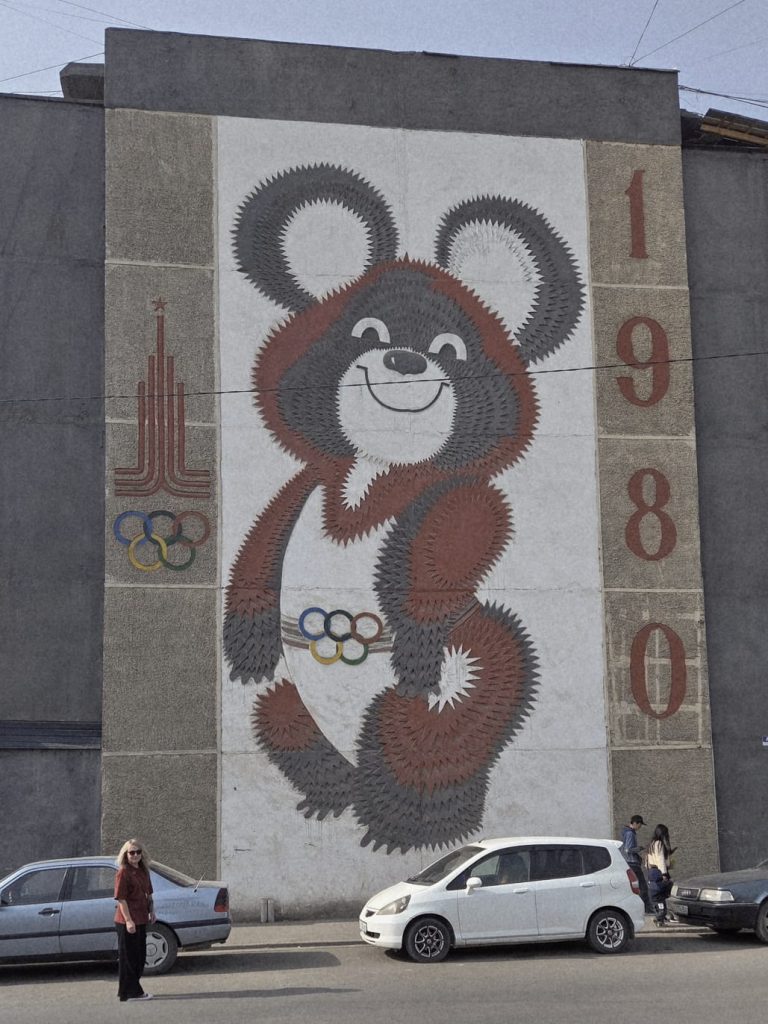
Wandering through the streets of Osh in Kyrgyzstan, far from the usual tourist spots, you’ll eventually come across what may be the city’s most beloved landmark: Misha.
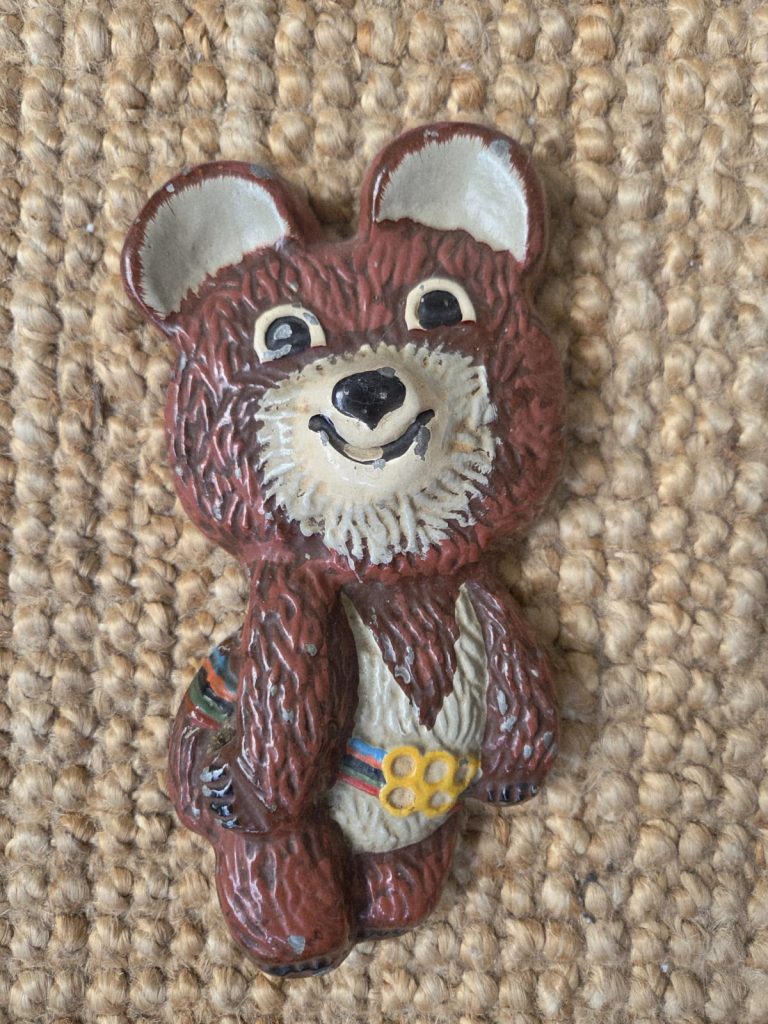
Misha the Olympic Bear was the official mascot of the 1980 Summer Olympics in Moscow, when the Soviet Union was at its height. Affectionately known as Mishka, the brown bear was designed by illustrator Victor Chizhikov, who was celebrated for his work in children’s literature.
More than just the face of the 1980 Games, Misha became an enduring symbol of Russian culture and folklore. His charming, cartoon-like appearance, with a constant smile and wide, expressive eyes, made him instantly recognizable and loved across generations.
The Purpose of Misha the Olympic Bear
The 1980 Moscow Olympic Games — the world’s largest international multi-sport event — marked the first time the Olympics were hosted in a Slavic-speaking nation and within the Eastern Bloc and communist world.
A symbol was needed to embody the Soviet Union’s unity, optimism, and the celebratory spirit of the Olympics. There was no better way to achieve this than through a mascot that reflected the host nation’s identity and culture in a universally appealing form. And so was Misha born!
The bear captured hearts not only among children but also among broader audiences who followed the Games in Moscow or on television. He became a major cultural and commercial success — the first Olympic mascot to be successfully and widely commercialized.
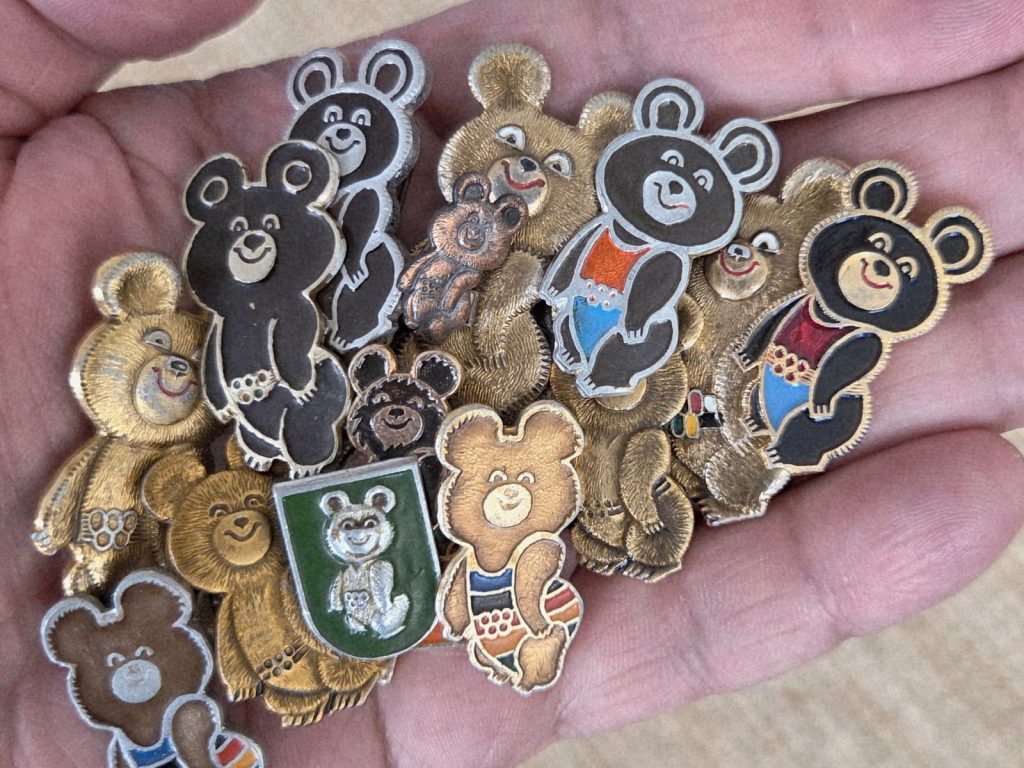
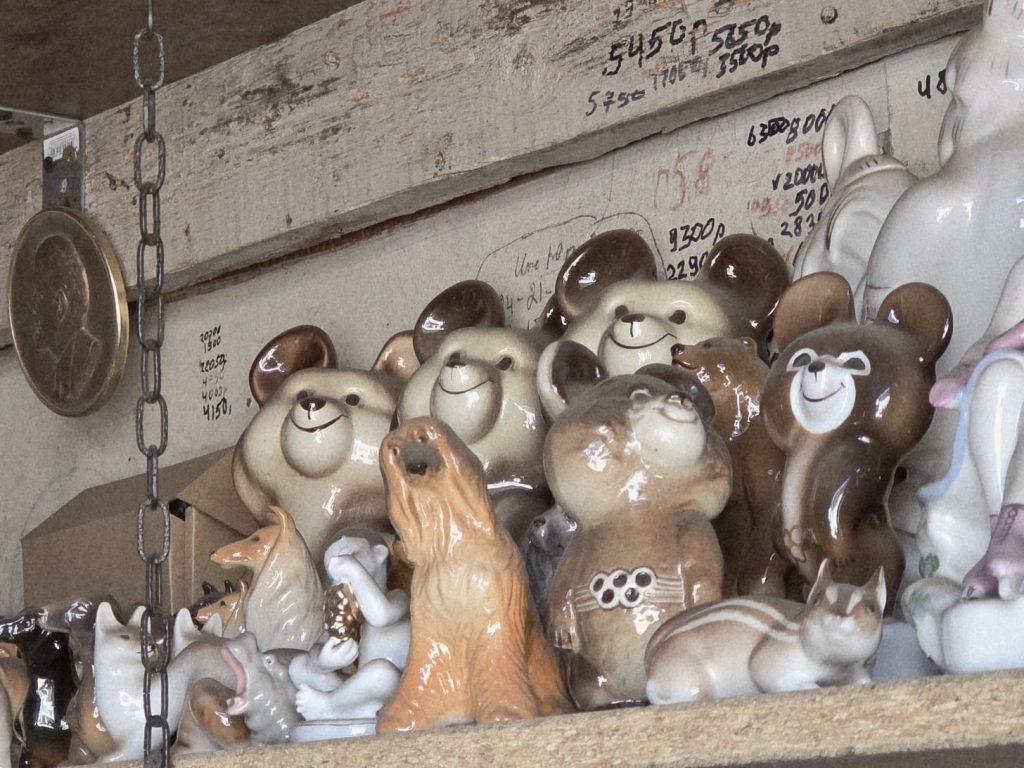
Throughout the former Soviet Union, you can still find Misha merchandise, from toys, stamps, pins, postcards, clothing and posters. Some of the best places are in the markets of Tiraspol (the capital city of Transnistria).
The Meaning of Misha the Olympic Bear
The brown bear is a cultural icon in Russia, deeply rooted in its folklore and traditions. In Russian stories and art, bears are often portrayed as strong yet kind and gentle creatures. Choosing a bear as the mascot made perfect sense, not only because it is a national symbol of Russia and the Soviet Union, but also because it represents the country’s strength, courage, and resilience.
However, darker times lurked in the background: the Moscow Olympics took place at the height of the Cold War, a geopolitical struggle defined by ideological conflict and the nuclear arms race between the U.S. and the Soviet Union.
So, Moscow needed a mascot to not only symbolize Soviet identity and values but also represent true peace and friendship. The cute bear was smiling and appeared friendly and welcoming which aimed to counter the Western perspectives of the people living behind the Iron Curtain.
Ultimately, Misha the Olympic Bear brought people together unlike the recent controversial opening ceremony of the Paris 2024 Olympics featuring a semi-naked blue guy.
The Legacy of Misha the Olympic Bear
The legacy of Misha the Olympic Bear continues decades after the Moscow Olympics. Misha remains a symbol of the Soviet Union, a source of nostalgia for many Russians for an era long gone.
The Soviet Union no longer exists, however, Misha remains a sentimental symbol of Soviet culture, a softer and more appealing mascot that only captured the hearts of the host nations but also the world.
Even today, Misha evokes a sense of unity and nostalgia for many who lived under the Soviet Union, particularly in Russia. Misha the Olympic Bear reflected a desire to promote peace, unity, and international friendship during a difficult and tense period.
The beloved Olympic mascot legacy lives on today, a cultural icon for many who cherish the nostalgia of the Soviet Union.
Find your own Misha the Olympic Bear Memorabilia
Our project has mapped quite a few monumental artworks depicting the character across the former USSR. Using our interactive map, you’ll be able to find them, view them, and navigate to them easily! Find all Misha artworks here here: Misha on interactive map.
If you’d rather join a guided adventure, several guides or tour operators — such as by Ravi Mistry, the author of this blog post – offer unique opportunities to explore former Soviet regions with experts who know their history and hidden corners.
Leave a Reply